
Military Reintegration After Deployment: Home, but Not Yet Home

Jasmine Zaman – PA-C

You expected relief. What you got is a house that feels tense in a way nobody warned you about. Military reintegration after deployment is its own adjustment period, and the friction in these first weeks is a normal part of it, not a sign your family is failing.
Why Military Reintegration After Deployment Is Harder Than Expected
Reintegration is the work of rebuilding daily life together after a deployment, and it takes far longer than the homecoming itself.
The military maps it in stages. Reunion comes first. Then, according to Military OneSource, the first several weeks back together can feel awkward and stressful, and settling into a new normal often takes several months to a year.
Most of the strain lives in the gap between the homecoming you pictured and the one you got. You are not behind schedule. You are in the part nobody puts on a banner.
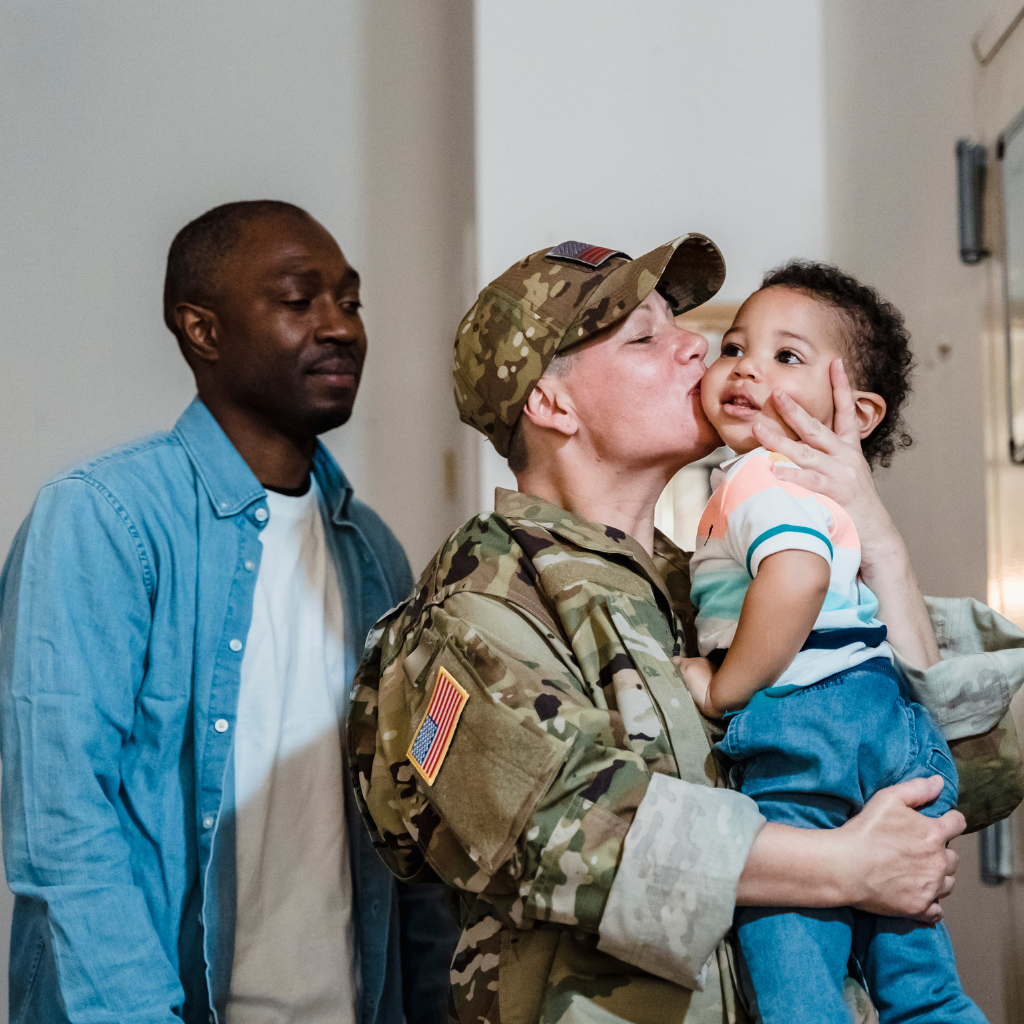
Coming Home From Deployment: Marriage, Roles, and Conflict
While you were apart, both of you kept going in different directions. One of you made every decision alone and built routines that ran without a second adult. The other adapted to a place where the mission set the schedule. Now both of those lives share a kitchen.
Clinical guidance for military families notes that relationship problems often surface as couples renegotiate roles and rebuild intimacy. Who handles the money now? Who does bedtime? How much space reads as respect, and how much starts to feel like distance.
You may also find yourself still scanning a quiet room for threats. That alertness kept you safe downrange. At home it can look like irritability or withdrawal to the people who missed you most.
Reconnecting After Deployment When You Have Kids
Your children can feel two things at once. Child psychiatry guidance notes that the excitement of a reunion is stressful for children, and how that shows depends on their developmental stage.
- Toddlers may act shy or stay glued to the parent who stayed home
- School-age children may push limits to see whether the rules changed
- Teenagers may keep their distance and stay busy with friends
None of that is rejection. Your child needs time to warm up to a parent who has been a voice on a screen, and following their pace works better than pushing for closeness.
When Military Reintegration After Deployment Needs More Than Time

Ordinary homecoming adjustment eases as the weeks pass. Arguments get shorter and sleep improves. Reach out to a mental health professional when the opposite is happening:
- Anger, drinking, or withdrawal is worse at 3 months than at 3 weeks
- Nightmares, flashbacks, or constant alertness are disrupting your sleep or work
- Conflict at home is escalating, or anyone in the house feels unsafe
- You are running on empty and cannot say when that started
Reintegration after deployment stress does not always arrive on schedule. Some people experience delayed on-set PTSD symptoms that appear months or years later, long after everyone assumed the transition was finished.
If you are having thoughts of suicide or self-harm, call or text 988 to reach the Suicide & Crisis Lifeline. Service members, veterans, and their families can press 1 for the Military Crisis Line.
What Family Therapy for Reintegration Actually Does
Couples and family sessions give you somewhere to renegotiate roles out loud instead of through arguments, and psychiatric care built around military and first responder schedules can treat the sleep, anger, and hypervigilance sitting underneath the conflict.
Final Thoughts
Homecoming was never going to fix everything, because the deployment was never the only thing that changed. Rebuilding a shared life asks patience from everyone in the house, and it is normal for that to take a season rather than a weekend. If the strain is not easing, support is here when you are ready.
Frequently Asked Questions (FAQs)
1. How long does military reintegration after deployment usually take?
Most families move through the roughest stretch in the first few weeks and settle into a workable rhythm over the following months. A comfortable new normal often takes closer to a year after a long deployment.
2. Is it normal to feel distant from your spouse after a deployment?
Yes. You both spent months operating separately, and closeness usually returns through ordinary daily contact rather than one big conversation. If the distance keeps growing after a few months, couples counseling helps.
3. When should a military family get professional help after a homecoming?
When symptoms are worsening instead of settling, when sleep or work is affected, or when conflict at home is escalating. You do not need a crisis to talk with a provider.


Animo Sano Psychiatry is now serving patients across multiple states. If you’d like to schedule an appointment, please contact us to get started.
Get Access to Behavioral Health Care
Let’s take your first step towards. Press the button to get started. We’ll be back to you as soon as possible.ecovery, together.