
Sandwich Generation Stress: Caring for Parents and Kids at Once
Clinically reviewed by

Stefanie Solomon, PA-C, CAQ-PSY

Key Takeaways
- About a quarter of U.S. adults now care for an aging parent while raising or supporting their own kids, and people in their 40s are the most likely to be in this spot.
- Much of sandwich generation stress comes from the mental load, the constant planning, tracking, and worrying for two generations at once.
- Burnout often starts with tiredness that rest doesn’t fix, a shorter fuse, and skipped self-care, so those early signs deserve attention.
- If low mood or anxiety lasts two weeks or more, it may be more than stress, and a mental health professional can help.
You’re refilling your mom’s pill organizer while your kid asks for help with homework, and your phone keeps lighting up with work messages. By the time everyone else is settled, there’s nothing left for you. If that sounds familiar, you’re living with sandwich generation stress, and you’re far from alone. Caring for parents and kids at once can wear down your mental health in ways that are easy to dismiss as a busy season. Here’s why it feels so heavy, who feels it most, and what helps, both on your own and with support.
What Is the Sandwich Generation?
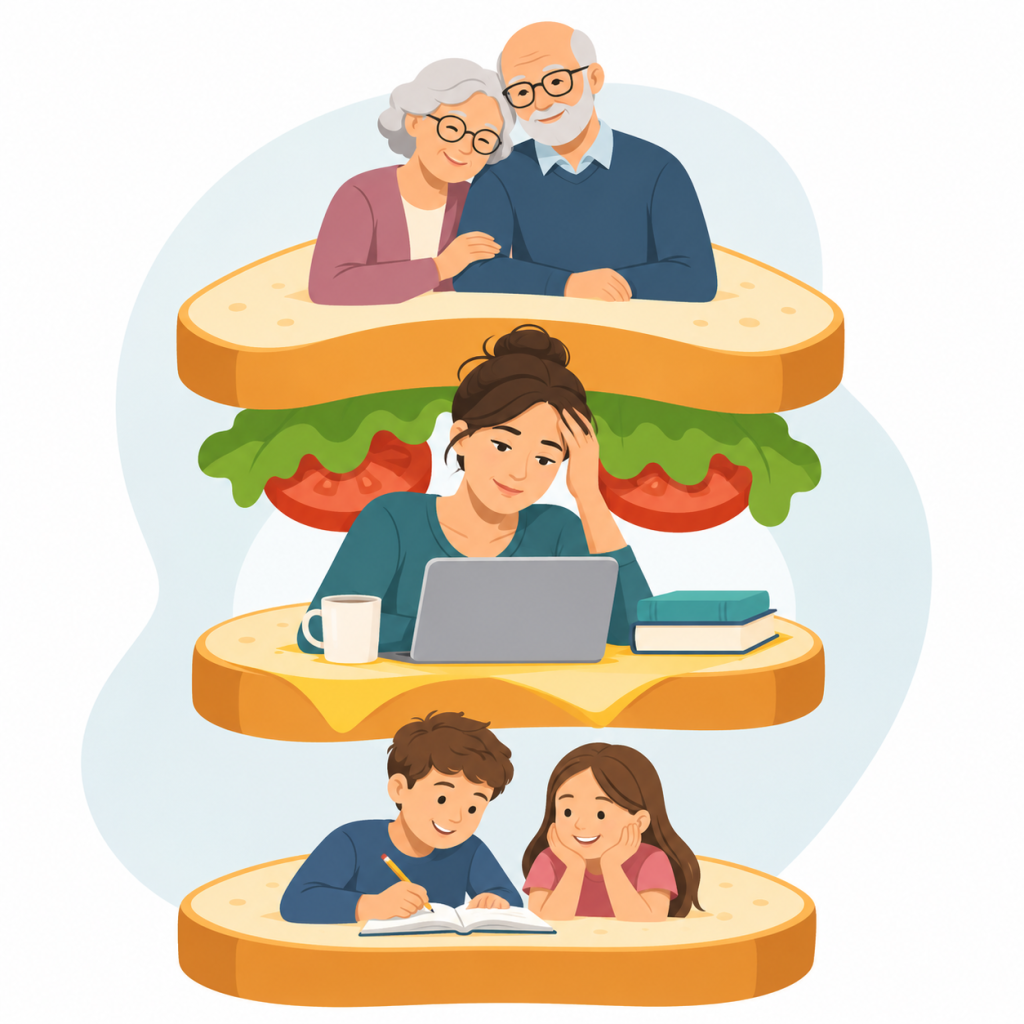
The sandwich generation describes adults who care for an aging parent while also raising children or supporting grown kids. You’re squeezed between two generations who both need you, often while holding down a job.
It’s more common than you might think. According to a recent Pew Research Center survey, a quarter of U.S. adults are now part of the sandwich generation, and adults in their 40s are the most likely to be in it. More than half of people in that age group are sandwiched.
The group keeps growing for a few reasons. People are living longer, so parents need help for more years. Many adults also start families later, which means young kids and aging parents can need you at the same time.
Why Caring for Everyone Feels So Overwhelming
The rides, meals, and doctor’s appointments are heavy on their own, but much of the strain comes from the mental load, the invisible work of tracking, planning, and worrying for everyone. You remember which parent needs a refill, which kid has a permission slip due, and whether anyone has eaten a vegetable this week. That list keeps running in your head, even when you’re lying in bed.
Caregiver mental load builds on itself. When your brain is always scanning for the next problem, your body stays in stress mode. Over time, that can show up as anxiety, low mood, poor sleep, or burnout. A national study found that sandwich caregivers were more likely to report substantial emotional difficulty than people caring only for an aging parent, at 44% compared with 32%.
You may also feel pulled in two directions at once. You leave your kid’s game early to check on your dad, then feel guilty for being distracted while you’re with him. Worrying about your parent’s health adds more weight, especially if your parent seems withdrawn or down, which can point to depression in an aging parent.
When multigenerational caregiving stress goes on for months or years, the exhaustion can start to look a lot like depression. Knowing the difference between burnout and depression can help you figure out what kind of support you need.
Who Feels Sandwich Generation Stress the Most
Anyone caring for two generations can feel stretched thin, but some situations make the load heavier. You may feel it more if you:
- Work full time and fit caregiving into the edges of your day
- Have no siblings, or have siblings who don’t share the work
- Care for a parent with dementia or a serious illness
- Have young children, or a child with extra needs, at home
- Feel stretched financially
The same study also found that sandwich caregivers were twice as likely to report financial difficulty as people caring only for a parent, at 36% compared with 17%.
About 60% of the caregivers in that study were women. For many women, this season overlaps with perimenopause, the years leading up to menopause, when hormone shifts can affect mood, sleep, and focus. A recent Mayo Clinic study of women ages 45 to 60 found that menopause symptoms got worse as weekly caregiving hours went up. Half of the women giving 15 or more hours of care a week reported moderate to severe symptoms. If your mood has felt harder to manage lately, hormonal changes may be part of the picture.
Men carry this load too, and the signs and strategies below apply to anyone in the sandwich years.
Signs of Caregiver Burnout You Might Brush Off
Sandwich generation caregiver burnout rarely arrives all at once. It builds slowly, and because your attention is on everyone else, the early signs are easy to wave away. Watch for:
- Tiredness that a good night’s sleep or a weekend doesn’t fix
- A shorter fuse, where small things feel huge
- Pulling away from friends, hobbies, or anything that’s just for you
- Guilt whenever you take time for yourself
- Skipping your own doctor visits and checkups
That last sign is common. Caregivers often delay their own preventive checkups while keeping everyone else’s appointments on track.
How to Cope With Sandwich Generation Stress
You can’t remove every demand, but you can make the load lighter and more shared. Start with one or two of these:
- Write the mental load down. Getting the running list out of your head and onto paper or a shared app makes it easier to see what someone else can take.
- Make one specific ask. “Can you take Mom to her Thursday appointment?” gets a better response than “Let me know if you can help.”
- Say no without a long explanation. You can protect your time without justifying it, and a simple “I can’t take that on right now” is enough.
- Protect one thing that’s just for you. Pick something small, like a 20-minute walk or a weekly call with a friend, and treat it like any other appointment.
- Look into respite care. Adult day programs and short-term in-home help give you planned breaks, and your local area agency on aging can point you to options nearby.
When to Get Help for Caregiver Burnout

Stress that rises and falls with a hard week is normal. It’s time to talk with a mental health professional when:
- Low mood, hopelessness, or loss of interest lasts two weeks or more
- Worry makes it hard to sleep, focus, or get through the day
- You feel irritable or numb most of the time
- Rest, time off, or extra help no longer brings relief
- You snap at the people you love and don’t recognize yourself
These can be signs of anxiety or depression, and both are treatable. A provider can help you sort out what’s going on and build a plan that fits your life. If finding a free hour feels impossible, telehealth visits let you meet with a provider from home, a parked car, or your desk at lunch.
Final Thoughts
Caring for your parents and your kids at the same time shows how much you love them. It also takes a real toll, and feeling worn down is a normal response to carrying this much. You deserve the same care you give everyone else. If the stress has started to feel like more than you can carry, a 15-minute no-cost meet and greet is a low-pressure way to talk through what you’re feeling and what support could look like.
Frequently Asked Questions (FAQs)
1. Can sandwich generation stress cause anxiety and depression?
Long-term stress from caring for two generations can raise your risk of both. The constant mental load keeps your body in stress mode, which affects your sleep, mood, and focus. If symptoms last two weeks or more, talk with a provider.
2. Can caregiver burnout turn into depression?
It can. Burnout usually eases when the stress lets up, but when it goes on for months, it can develop into depression. One sign to watch for is when rest or a break no longer helps you feel better.
3. How do I stop feeling guilty about taking care of myself?
Guilt is common among caregivers, and it often comes from caring deeply. It may help to see your own health as part of caregiving, since the people who depend on you need you rested and well. Start with one small protected habit, and notice that everyone is still okay when you take that time.
4. How do I ask my siblings to help with our parents?
Be specific about what you need and when. List the tasks, like rides, bill paying, or weekly check-in calls, and ask each sibling to choose one. Siblings who live far away can still handle phone calls, paperwork, or costs.



Animo Sano Psychiatry is now serving patients across multiple states. If you’d like to schedule an appointment, please contact us to get started.
Get Access to Behavioral Health Care
Let’s take your first step towards. Press the button to get started. We’ll be back to you as soon as possible.ecovery, together.