
First Responder Spouse Support: When the Job Comes Home

Soji Ojo MD, MPH
Key Takeaways
- If your partner comes home present in body but absent in every other way, you are not imagining it, and you are not the cause.
- Irritability, withdrawal, and one-word answers are common trauma symptoms. You can recognize them early, before anyone labels them.
- Supporting your partner well does not mean forcing conversations or absorbing everything in silence. A low-pressure approach helps them open up at their own pace.
- You can encourage treatment without ultimatums, and without becoming your partner’s therapist.
- Your own wellbeing is not a luxury. Exercise, support, and clear boundaries all help you stay steady.
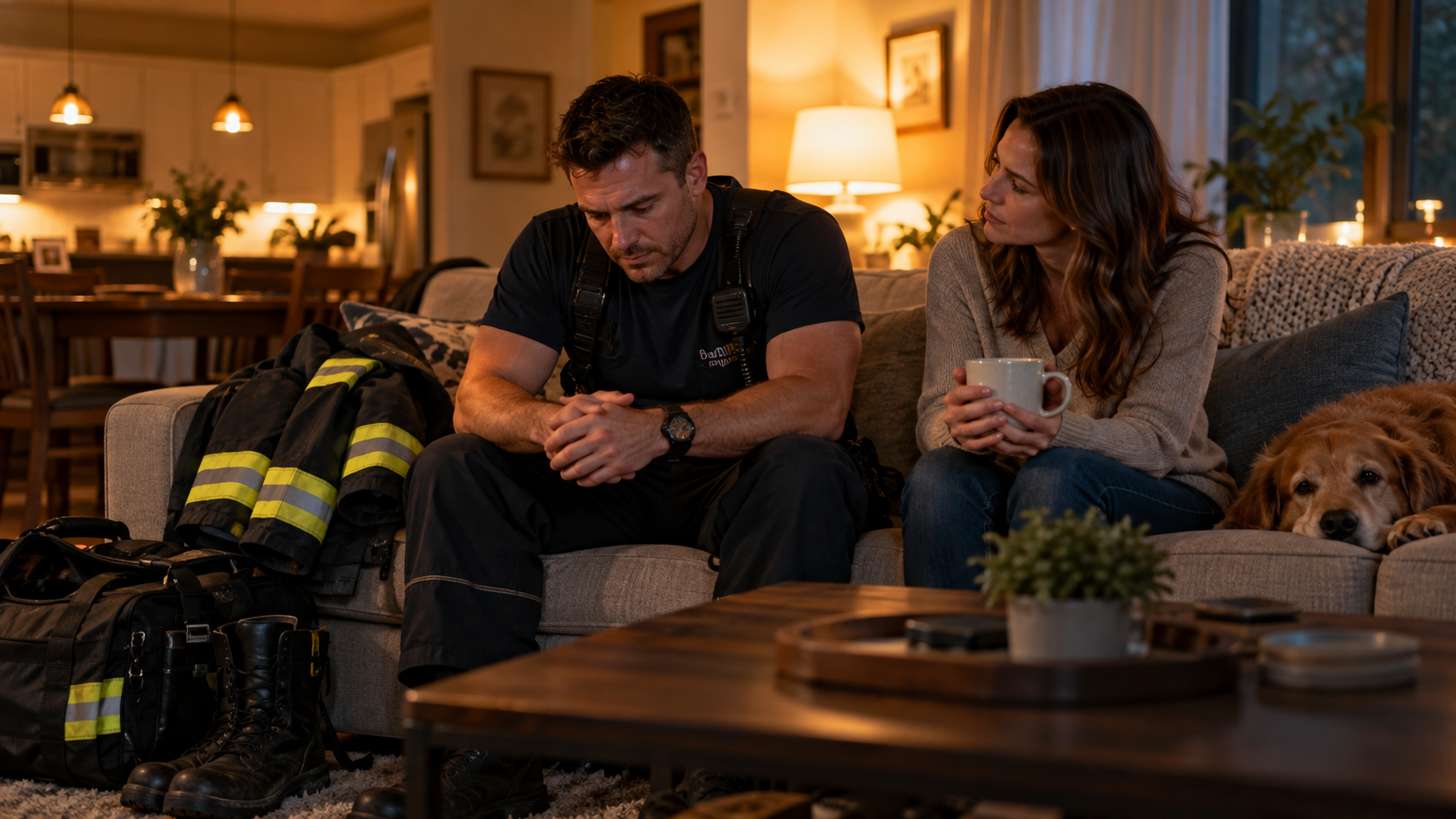
You ask how the shift went. You get “Fine.” If most nights end there, you already know the feeling this article is about. First responder spouse support starts here, with a partner who is home but not fully back. The distance is real, you did not cause it, and there are better options than forcing the conversation or carrying it all yourself.
When the Job Follows Your Partner Home
It rarely announces itself. It is the missed birthdays that stopped stinging because you learned to expect them, and the restaurant seat facing the door every time. The way a hard call comes home as silence, not because your partner does not trust you, but because part of them believes describing it would hand you images they cannot unsee.
Then there is hypervigilance, a threat-scanning system that training deliberately builds and the nervous system forgets to switch off. That alertness does not stop at the end of a shift, and recognizing it as a trained response rather than a personal failure makes patience easier.
Military spouses know a version of this, where the partner who returns from deployment comes back in body weeks before the rest of them arrives. If there are children in the house, they notice the distance too, even when nobody names it. How you frame it for them matters. “Dad’s brain is working extra hard right now” lands very differently than silence they will fill with their own explanations. If a child seems to be carrying it, support is available to them as well.

Why Trauma Symptoms Show Up at Home First
Trauma-related changes almost always surface in the relationship before anyone calls them clinical. You are not being oversensitive by noticing first; you are simply standing closest.
Research on trauma and couples bears this out. PTSD symptoms, especially emotional numbing, are consistently linked to lower relationship satisfaction and less emotional openness for both partners. Read that carefully: the numbness is not lost love. It is one of the most common symptoms of an injury, and it is a treatable one.
When “It’s Just the Job” Deserves a Closer Look
What separates a rough stretch from something worth acting on is duration. These changes have lasted more than a few weeks, not one bad night:
- The withdrawal is the rule now, not the exception after hard calls
- Sleep has changed, with nightmares, pacing at night, or dreading bed
- Irritability or a short fuse that is new, and aimed at home
- Drinking more to come down, or needing it to sleep
- They have stopped doing things they used to enjoy, on duty and off
- You feel like you are managing them instead of living with them
These are signs of a treatable condition, not a verdict on your marriage.
What Helps and What Backfires When You Support a First Responder
| What helps | What backfires |
| Give them a landing window. Let the shift wear off before talking | Demanding a debrief the moment they walk in |
| Ask once, then leave the door open: “I’m here when you want to talk” | Repeated pressure, which teaches them to shut down faster |
| Lead with function, not feelings: “You don’t seem like yourself lately” | Leading with labels: “I think you have PTSD” |
| Name specific changes gently, without diagnosing them | Ultimatums and scorekeeping, which confirm the fear of being a burden |
The pattern is the same throughout: low pressure, an open door, specifics over labels.
The timing rule deserves particular attention: the hour after a shift is the worst hour to talk. Let the body come down first. And when you do name what you are seeing, describe behavior rather than diagnosis. “You’ve been somewhere else at dinner lately” opens a door that “I think you have PTSD” slams shut.
On the hard nights, the pacing at 3 a.m. or the two days of silence after a bad call, presence beats conversation. Sit nearby without an agenda. Do not corner them or block the garage door. A hand on the shoulder and “I’m up if you want company” does more than any question. You are not fixing the night. You are making sure they do not spend it alone.
One boundary outranks all of this advice. If anger at home ever escalates to the point where you feel unsafe, that is beyond wait-and-support. Reach out for help for yourself first. Your safety is not a betrayal of your partner, and getting support in that moment protects you both.
How to Encourage Therapy Without Pushing
One version of support slowly destroys marriages: becoming your partner’s only outlet, on call at 2 a.m., managing their moods like a second job. You can love someone completely and still not be their treatment plan. Staying in the spouse role, and letting a professional hold the clinical one, usually protects both of you.
When you raise it, raise it once and well. Frame treatment as maintenance rather than crisis, and as an evaluation rather than a commitment.
If the objection is career fear, that worry is answerable. Voluntarily seeking help carries far less career risk than most responders believe, and telehealth means no waiting rooms at all. If individual care keeps getting refused, couples or family therapy can be the on-ramp. Some partners will walk through a door labeled “us” long before one labeled “me.” Speak with a provider about which entry point fits your situation.
Secondary Traumatic Stress Can Happen to You Too
Living alongside someone else’s trauma has its own clinical vocabulary. Two terms are worth knowing.
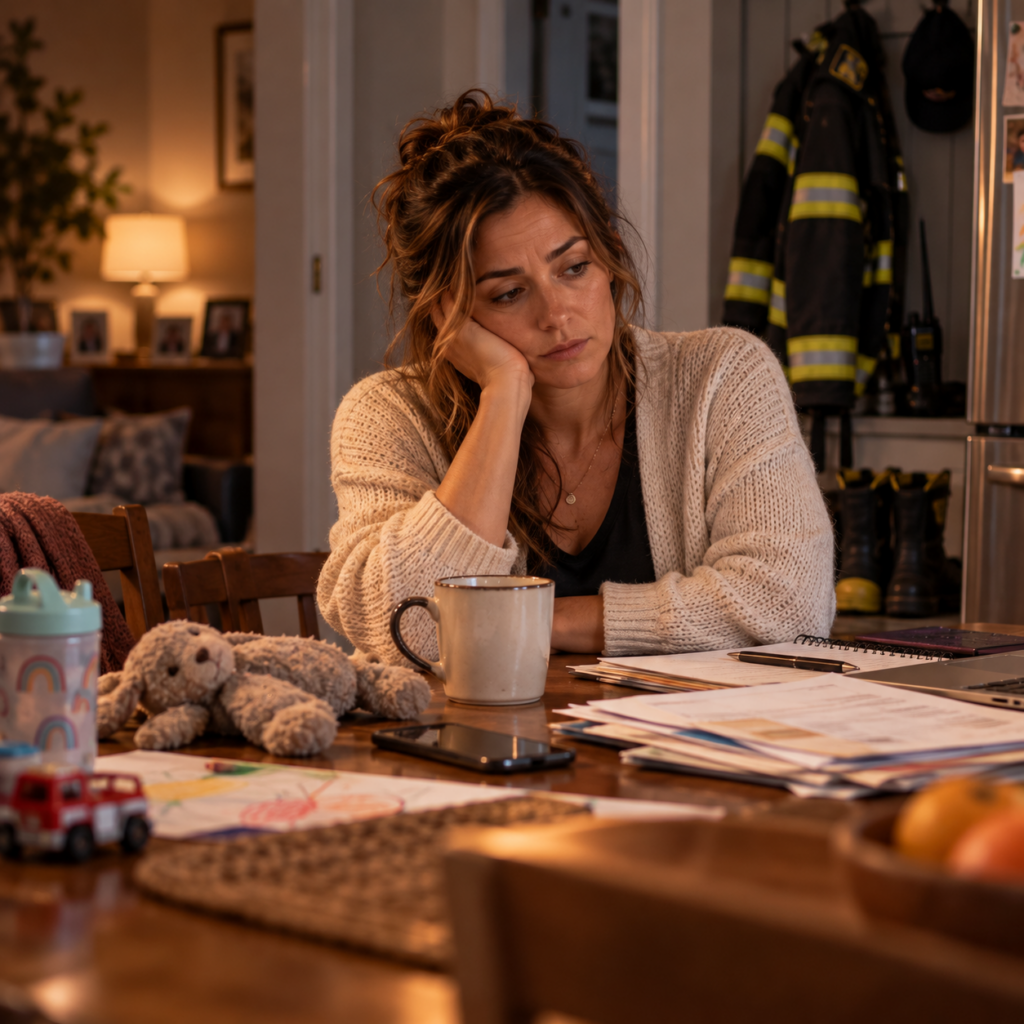
Secondary traumatic stress is distress absorbed through close exposure to another person’s trauma, and it can happen to family members, not just clinicians. Caregiver burnout is the exhaustion that builds when you spend your reserves managing someone else’s wellbeing. Clinical sources report that more than 60% of caregivers experience its symptoms. The two overlap, and telling them apart changes what actually helps.
If you are exhausted, resentful, or numb yourself, that is not disloyalty. It is information. Your own therapy is not a betrayal of your partner. It is often the thing that keeps the household standing while they get well, and it models the behavior you are hoping they will choose.
Final Thoughts
You married a person, and the job moved in with you. That does not make the distance permanent, and it does not make either of you a villain. The symptoms that feel like rejection are usually an injury doing what injuries do, and injuries respond to treatment.
Care built for first responders, service members, and their families includes care for you, whether or not your partner is ready. A 15-minute, no-cost meet and greet is a low-stakes place to ask the questions you have been carrying alone.
Frequently Asked Questions (FAQs)
1. Is this just the job, or something that needs treatment?
One rough stretch after a bad call is usually the job. Changes that persist for more than a few weeks, such as ongoing withdrawal, sleep problems, a new short fuse, or drinking to come down, point toward something treatable. Duration and pattern matter more than any single incident.
2. How do I get my first responder spouse to go to therapy?
Raise it once, calmly, and frame it as an evaluation rather than a commitment. Describe specific changes instead of using labels, address the career-confidentiality fear directly, and leave the door open rather than press. If individual care is refused, couples therapy can be a more manageable first step.
3. What is secondary traumatic stress?
It is distress that develops from close, ongoing exposure to another person’s trauma: their symptoms, their stories, or the toll on daily life. Family members of first responders can experience it, and it responds to the same professional support as other stress conditions.
4. Should I get therapy even if my partner will not?
It can, particularly when treatment is sequenced. Approaches that build emotional regulation skills before processing traumatic memories tend to do more for emotional regulation, including anger, than trauma processing alone. Progress is usually measured by a widening gap between the trigger and the reaction rather than by the anger disappearing.


Animo Sano Psychiatry is now serving patients across multiple states. If you’d like to schedule an appointment, please contact us to get started.
Get Access to Behavioral Health Care
Let’s take your first step towards. Press the button to get started. We’ll be back to you as soon as possible.ecovery, together.