
Will Getting Mental Health Help Hurt Your Military Career

Stefanie Solomon, PA-C, CAQ-PSY

Key Takeaways
- Research found that 97% of service members who voluntarily sought mental health treatment experienced no negative career impact. The fear that asking for help will end your career is not supported by the evidence.
- The greater career risk runs the other direction. Among those who received command-directed evaluations, where leadership orders the assessment, 39% experienced negative career consequences. Waiting until the problem is visible to your command carries far more risk than seeking help on your own.
- When you seek mental health treatment voluntarily, your commander is not notified and cannot access your medical records. There are limited exceptions related to safety and mission readiness, but the vast majority of treatment falls well within existing privacy protections.
- TRICARE generally includes coverage for therapy, psychiatric care, and telehealth visits. Coverage details and costs vary by plan, but active-duty members typically have little to no out-of-pocket cost for mental health services.
- Telehealth has made it possible to access treatment without walking into a behavioral health clinic on base, which removes one of the most commonly cited barriers for both service members and first responders.
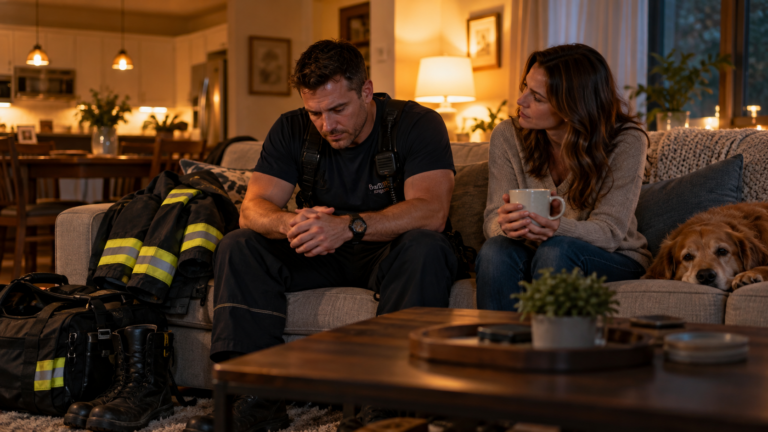
You’ve thought about getting help. Maybe you’ve thought about it for a long time. But every time you get close to making the call, the same question stops you: what happens to my career if someone finds out?
That question keeps more service members and first responders from getting treatment than any other barrier. Not access. Not cost. Fear. And while that fear is understandable, given the culture you operate in and the stories you’ve heard, it doesn’t hold up against what the evidence actually shows.
Why Service Members Fear Seeking Mental Health Help
No one needs to explain to you why this fear exists. You’ve seen what happens when someone gets pulled from duty. You’ve heard secondhand stories about careers ending after a mental health referral. And you’ve been trained, explicitly and implicitly, that toughness is what keeps you and the people around you alive.
That training serves a purpose in the field. It becomes a liability when it prevents you from addressing a condition that is actively impairing your ability to function. Depression, PTSD, anxiety, and sleep disorders are not signs that you can’t do your job. They’re medical conditions with effective treatments. Research suggests that nearly one in four active-duty members show signs of a mental health condition at some point during their service.
The stigma isn’t just internal. Military culture has historically reinforced the message that asking for help means you can’t be relied on. That message is shifting at the institutional level, but cultural change moves slower than policy change, and for many service members, the old rules still feel like the real ones.

Does Mental Health Treatment Affect Your Military Career?
This is where the facts matter more than the fear.
Research found that 97% of military personnel who voluntarily sought mental health treatment experienced no negative career impact. The same body of evidence found a very different outcome for those who didn’t seek help on their own: among service members who received command-directed mental health evaluations, 39% experienced negative career consequences.
That contrast is worth sitting with. The risk isn’t in getting help. The risk is in not getting it. An untreated condition that worsens over time can lead to performance issues, incidents, or behaviors that trigger the very outcome you were trying to avoid. A command-directed evaluation, by design, involves your chain of command and carries far less confidentiality protection than a voluntary visit.
Seeking help early, on your own terms, is the move that protects both your health and your career.
Active Duty Mental Health Confidentiality: What’s Protected
Department of Defense policy establishes clear privacy protections for service members who seek mental health care voluntarily. When you self-refer, your commander is not notified and cannot access your treatment records. This is the default, not the exception.
There are situations where notification is required. Providers must notify your command if:
- Your condition poses a serious risk of harm to yourself or others
- Your condition impairs your ability to perform sensitive or urgent mission requirements
- Your condition affects your fitness to handle classified information
- You require inpatient hospitalization
Outside of those specific circumstances, your treatment remains between you and your provider. The Brandon Act, signed into law in 2022, further strengthened this by giving every service member the right to request a confidential mental health evaluation through their chain of command without that request being treated as a negative indicator.
The key distinction: voluntary self-referral is protected. Command-directed evaluation is not. The difference between the two, in terms of both privacy and career outcomes, is significant.
TRICARE Mental Health Coverage for Service Members
TRICARE is the health insurance program for military members, retirees, and their families. It generally includes coverage for outpatient therapy, psychiatric medication management, inpatient care when necessary, and substance use treatment. For active-duty service members, out-of-pocket costs for mental health services are typically minimal to none, though specifics can vary by plan.
TRICARE also generally covers telehealth mental health visits. For many service members and first responders, this has been one of the most important shifts in access. You can see a provider from your home, your car, or anywhere with a private connection, without walking into a behavioral health clinic where you might be seen by someone in your unit.
For those who are no longer active duty, TRICARE eligibility varies by plan. Veterans may also access mental health care through the VA or through private providers who accept TRICARE. If you’re unsure what your coverage looks like, a provider who works with military and first responder populations can help you navigate what’s available.
How Telehealth Reduces Stigma for Active Duty and First Responders
The visibility concern is real. Walking into a behavioral health clinic on a military installation means being seen. For some service members, that alone is enough to keep them away. First responders face the same dynamic in their departments.
Telehealth eliminates that barrier. You can access evidence-based therapy and psychiatric care from a private location, on a schedule that works around your duties, without anyone in your unit or department knowing.
This isn’t a lesser version of care. Clinical outcomes for telehealth-delivered mental health treatment are comparable to in-person treatment across a range of conditions, including PTSD, depression, and anxiety. What changes is the access point, not the quality.
Why Getting Help Protects Your Career and Your Readiness

This isn’t a motivational statement. It’s an operational one. A service member managing untreated PTSD, depression, or chronic sleep disruption is operating at reduced capacity. Reaction time, judgment, emotional regulation, situational awareness: all of these are affected by untreated mental health conditions.
Seeking treatment isn’t stepping away from readiness. It’s restoring it. The military invests significantly in physical conditioning, tactical training, and medical readiness. Mental health treatment is part of that same framework, and treating it differently doesn’t serve you or the people who depend on you.
Final Thoughts
The fear that getting help will end your career is understandable. It comes from a culture that values toughness and from stories that have circulated for years. But the data tells a different story. The vast majority of service members who seek help voluntarily see no career impact. The ones who face career consequences are overwhelmingly those who waited until their command had no choice but to intervene.
You’ve been trained to assess risk. This is a risk assessment. And the evidence is clear about which path carries less.
Frequently Asked Questions (FAQs)
1. Will my commander find out if I see a therapist?
Not if you self-refer. Under Department of Defense policy, voluntary mental health treatment is private. Your commander will not be notified unless your condition poses a risk of harm, affects your fitness to handle classified information, or requires inpatient care.
2. Does mental health treatment affect my security clearance?
Voluntarily seeking treatment for depression, anxiety, or PTSD does not affect your clearance. The security questionnaire was revised to make this clear. Untreated conditions that lead to behavioral issues are more likely to create problems than treatment itself.
3. What’s the difference between self-referral and a command-directed evaluation?
Self-referral is voluntary and carries stronger privacy protections. A command-directed evaluation is ordered by your leadership and involves your chain of command. The career outcomes are significantly different: 97% of those who self-referred had no negative impact, compared to 39% negative outcomes for command-directed evaluations.
4. Does TRICARE cover therapy and telehealth for mental health?
TRICARE generally includes coverage for therapy, psychiatric care, and telehealth visits. Active-duty members typically have minimal to no out-of-pocket costs, though coverage details vary by plan and status. Contact your TRICARE plan or a provider familiar with military benefits to confirm what applies to your situation.


Animo Sano Psychiatry is now serving patients across multiple states. If you’d like to schedule an appointment, please contact us to get started.
Get Access to Behavioral Health Care
Let’s take your first step towards. Press the button to get started. We’ll be back to you as soon as possible.ecovery, together.