
What Does TMS Feel Like? Tapping, Clicking, and Staying Awake
Clinically reviewed by

Caleb Whitenack, MD
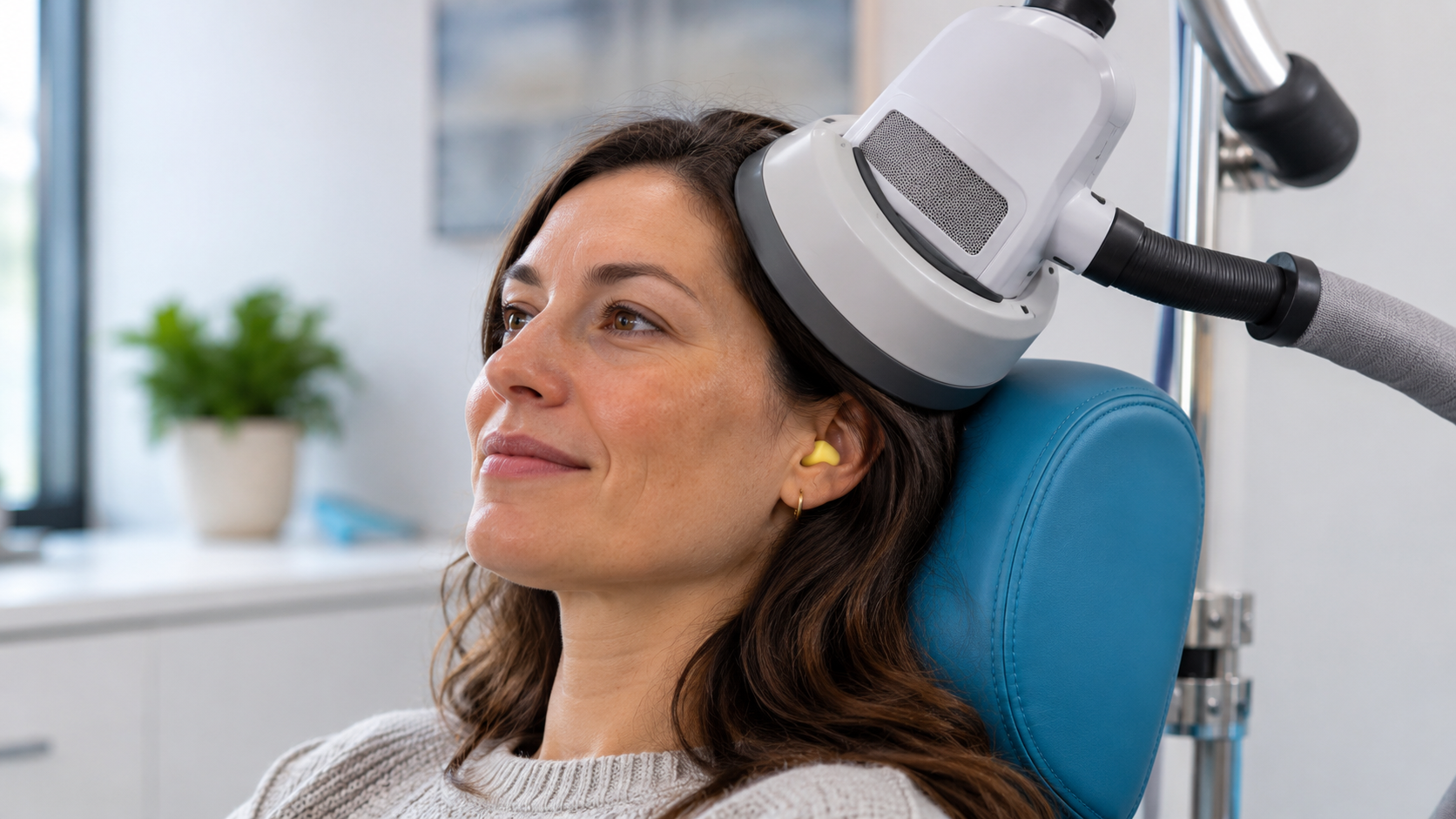
If you’re considering transcranial magnetic stimulation (TMS), you’ve probably read plenty about whether it works but perhaps very little about what it feels like. The short answer is firm tapping on one spot of your scalp, a loud clicking sound, and staying fully awake through all of it. Here’s what that means minute to minute, and what changes after the first few sessions.
What Does TMS Feel Like in the Chair?
The pulses feel like firm, repetitive tapping on a small area of your scalp, closer to a finger knocking on your head than to pain.
Nothing is striking your head; the tapping comes from the sensation of the magnetic pulse passing through your scalp.
The pulses also don’t run continuously. Our pattern is “4 seconds of stimulation followed by a pause of 10 seconds”, so a session arrives in waves with breaks built in rather than as one long stretch of tapping.
The clicking is louder than most people expect. You’ll wear earplugs, and each click lands with each pulse, so the sound keeps the rhythm of the sensation. Rarely, some people also feel a twitch in the jaw, cheek, or eyelid while the pulses run, which stops when the stimulation does.
Your first session feels the strangest, because it includes a mapping step. The coil is moved around your scalp at different locations and strengths until your fingers and/or thumb moves on your right hand. It is this process that determines your specific dose. Watching your hand move without deciding to move it is a genuinely odd few minutes.
Is TMS Painful?
Most people say the tapping bothers them most in the first session or two, then fades into background noise once they’re used to it. If it stays uncomfortable, say so during the session rather than waiting it out, the team can shift the angle of the coil or raise the intensity more gradually.
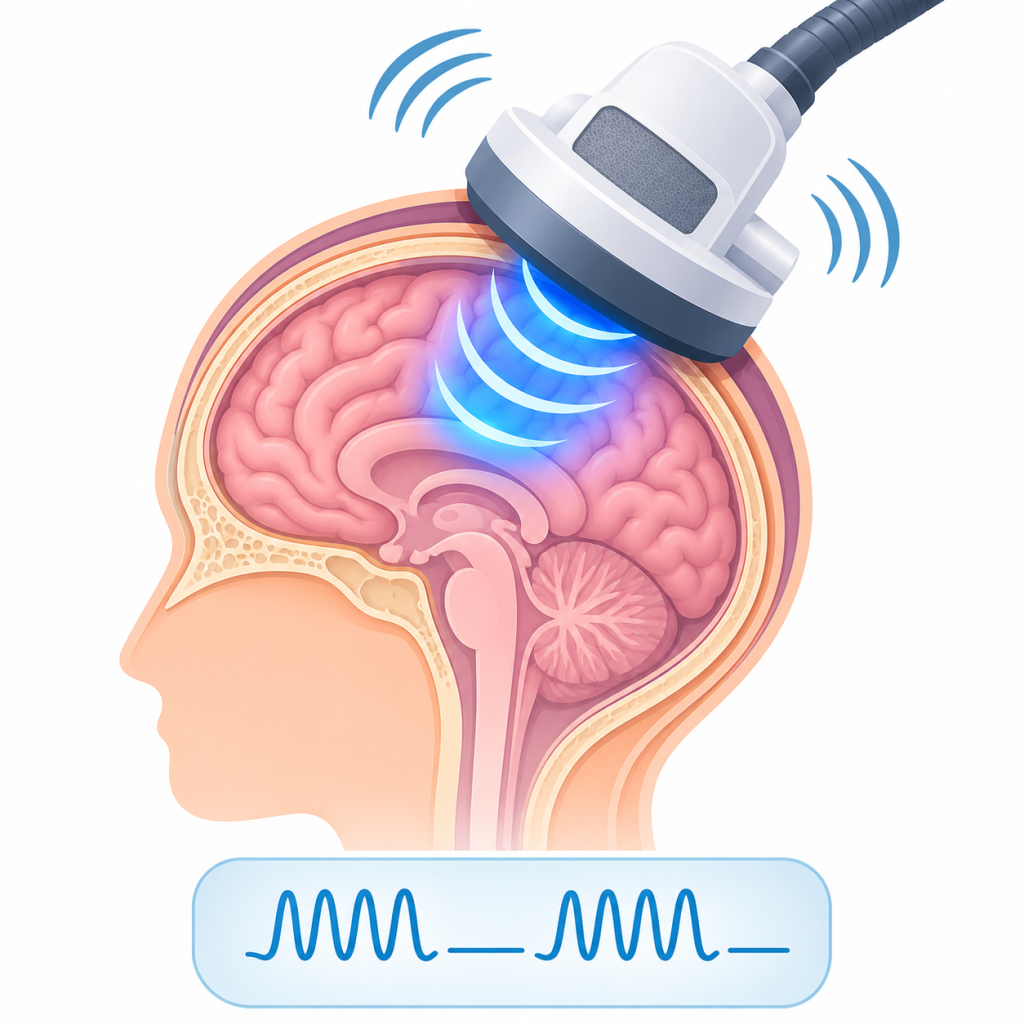
What to Expect in a TMS Session, Start to Finish
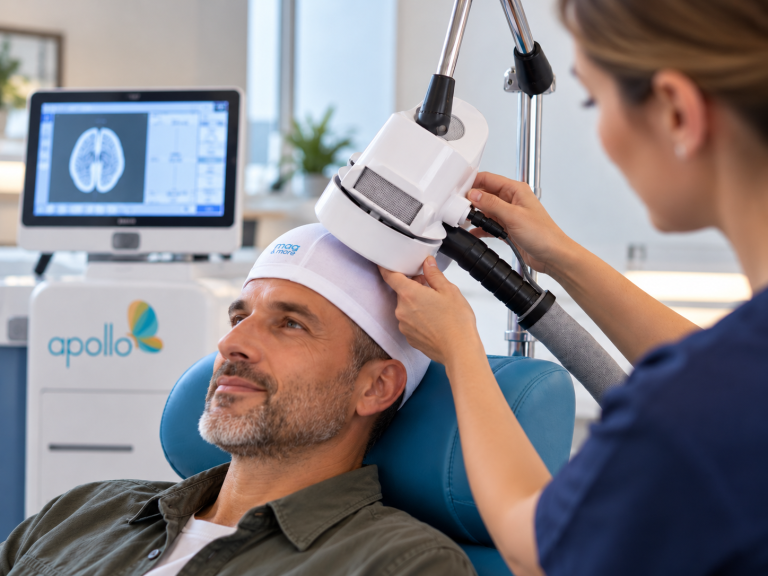
You sit in a chair, take off your glasses and any jewelry near your head, and put in earplugs. The coil gets positioned, the pulses run in bursts, and then it’s over. Most sessions last somewhere between 20 and 40 minutes.
You’re awake and alert the whole time, so you can listen to music, talk with the technician, or close your eyes. The mapping and setup steps are what make your first appointment run longer than the rest.
TMS vs. ECT: What’s the Difference?
This is the fear that stops many people, and the two are not the same procedure. NAMI notes that TMS doesn’t use anesthesia and you stay awake during treatment. Electroconvulsive therapy, or ECT, is done under general anesthesia and deliberately triggers a brief seizure. TMS does neither, which is also why you can drive yourself home afterward.
What Does TMS Feel Like After a Session?
Most people walk out feeling normal. In the first week, headache and scalp tenderness are the most common side effects of TMS, and they usually ease as the course continues. Some people feel briefly lightheaded afterward. Tell your provider about anything that lingers, since small adjustments often fix it.
What to Ask Before You Start

Screening before your first session exists to catch the reasons TMS might not be safe for you. Metal implants in or near your head, a history of seizures or epilepsy, past head injuries, and pregnancy all need to come up, along with every medication and supplement you take.
Three questions to bring to that appointment:
- What will the sensation feel like with the protocol you use?
- What happens if the tapping is too uncomfortable for me?
- How much longer is my first session than the rest?
Final Thoughts
Fear of the unknown is a fair reason to hesitate, and it’s also the easiest one to settle. The sensation is strange on day one and ordinary by the end of the first week for most people. If you’re weighing whether TMS is a fit for your situation, a consultation is where those questions get answered against your own history.
Frequently Asked Questions (FAQs)
1. Does TMS hurt?
It doesn’t for most people. The sensation registers as pressure and tapping rather than pain, though a few people find it sharp enough to need the intensity dialed back at first.
2. Can I drive myself home after a TMS session?
You shouldn’t make that change on your own. TMS for OCD is designed as an add-on, and research suggests it works best alongside ongoing treatment. Any adjustment to therapy or medication should happen with your provider.
3. What if the clicking noise bothers me?
Earplugs are standard and take the edge off. If noise is a particular problem for you, raise it at your consultation.
Explore More


Animo Sano Psychiatry is now serving patients across multiple states. If you’d like to schedule an appointment, please contact us to get started.
Get Access to Behavioral Health Care
Let’s take your first step towards. Press the button to get started. We’ll be back to you as soon as possible.ecovery, together.