
TMS for Older Adults: A Non-Medication Option for Late-Life Depression

Caleb Whitenack, MD
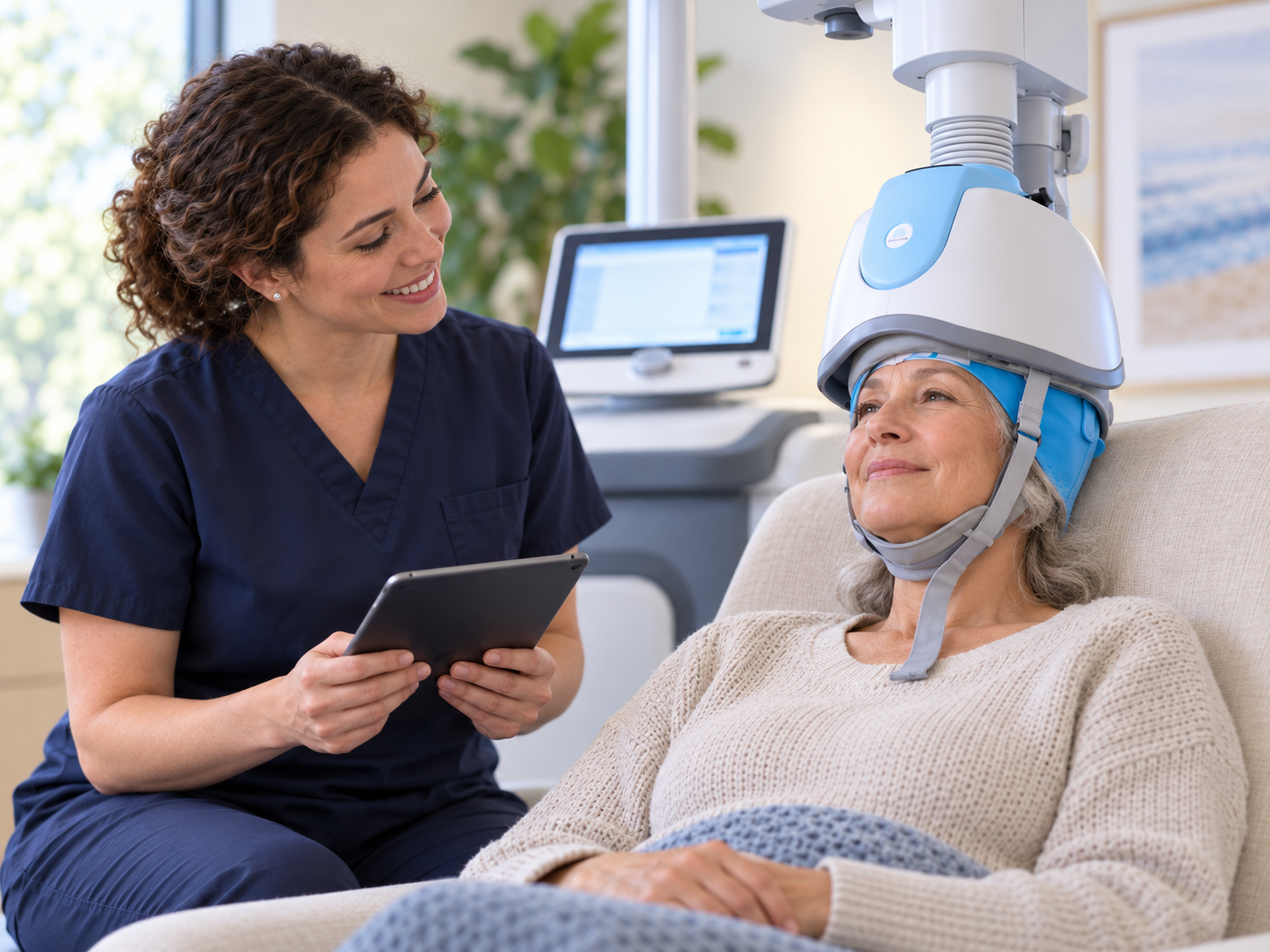
If depression has settled in later in life and the usual medications haven’t helped, it’s easy to assume you’ve run out of options. Maybe you’re already taking several prescriptions, and adding another, with new interactions and side effects, feels like more risk than relief. Whether you’re facing this yourself or worried about an aging parent, there’s an option many people don’t realize is well suited to older adults: TMS, a drug-free treatment for depression that adds nothing to the medicine cabinet.
Why Late-Life Depression Is So Hard to Treat
Depression in older adults is common, but it’s often missed or brushed off as a normal part of getting older. It isn’t. And when it is recognized, it can be genuinely harder to treat than depression earlier in life.
Part of the challenge is medication. Older adults often manage several health conditions at once, and antidepressants carry a greater risk of side effects when someone is already taking multiple medications, because of interactions and the body’s changing response to drugs with age. When one antidepressant doesn’t work, adding or switching to another isn’t always simple or safe. That’s a big reason late-life depression so often goes undertreated, and why a non-medication option is worth knowing about. For families making sense of it all, our guide on what to know about depression later in life is a helpful starting point.

Do Older Brains Respond to TMS?
Yes. There was an early concern that TMS might work less well later in life, partly because the brain changes with age in ways that can affect how stimulation reaches its target. The research has not supported that worry.
A 2025 review pooled ten randomized controlled trials of TMS for late-life depression and found that people who received real stimulation were more likely to reach both response and remission than those who received a placebo version of the treatment. Response means symptoms improved significantly while remission means they are largely lifted.
The same review found that how the treatment was delivered mattered: courses given at full stimulation intensity outperformed weaker ones. What predicts a good outcome is an accurate assessment and a properly delivered course, which is something a provider works out with you.
Why TMS Suits Older Adults
Beyond the results, a few things make TMS a good fit later in life:
- It’s drug-free. There’s nothing new to interact with the medications you already take, which removes one of the biggest hurdles in treating late-life depression.
- Side effects are usually mild and local. Most people notice only a tapping sensation during sessions, and sometimes a mild headache afterward, with none of the body-wide effects that can come with medication.
- It doesn’t require anesthesia or hospital stays. You stay awake, sit in a chair, and can drive yourself home afterward, which matters when energy and mobility are already a concern.
- The schedule fits a retired life. Sessions run on weekdays for several weeks, which is hard to fit around a job. If your calendar is largely your own, that daily commitment is far easier to keep.
This is an option for when medication alone hasn’t been enough, not a replacement for treatment that is already working.
What a Course of TMS Involves
A typical course of TMS runs over several weeks, with short sessions on weekdays in an outpatient office. You’re awake and alert the whole time, and there’s no recovery period, so most people head straight back to their day. Because the schedule means regular visits, it’s worth planning ahead for transportation, especially if driving or distance is a factor. A provider can walk through the specifics and help figure out what’s realistic.
How to Talk to a Provider About TMS

If this sounds like it might fit, the next step is a conversation, whether you’re asking for yourself or raising it for a parent. It helps to ask whether TMS is a good fit given the person’s health history and current medications, to mention what’s been tried already since TMS is typically considered when antidepressants haven’t brought enough relief, and to ask what the schedule looks like so you can plan around visits.
Raising it for a parent can feel delicate. Framing it gently, as one more option worth asking a doctor about rather than a decision you’re making for them, often lands best. A provider who offers TMS for depression can talk through whether it’s appropriate.
Final Thoughts
Getting older doesn’t mean living with depression that won’t lift. Late-life depression is treatable, and for many people a drug-free option like TMS opens a door medication alone couldn’t. If you or someone you love has been stuck, it’s worth asking a provider whether TMS is a fit. Age isn’t the barrier it’s often assumed to be, and feeling better is still very much possible.
Frequently Asked Questions (FAQs)
1. Is TMS safe for elderly patients?
Yes. Studies in adults well into their 80s and 90s have found TMS to be well tolerated, with mild, temporary side effects and no serious adverse events reported.
2. Does TMS work as well for older adults as it does for younger people?
Research in patients aged 60 and up shows strong response and remission rates.
3. Is TMS covered by Medicare?
TMS for depression is widely covered, including by most Medicare plans, when antidepressants haven’t worked. Coverage details vary, so it’s worth confirming with the specific plan.
Explore More



Animo Sano Psychiatry is now serving patients across multiple states. If you’d like to schedule an appointment, please contact us to get started.
Get Access to Behavioral Health Care
Let’s take your first step towards. Press the button to get started. We’ll be back to you as soon as possible.ecovery, together.