
Grandparent Burnout: Mental Health Toll of Raising Grandkids
Clinically reviewed by

Carolyn “Callie” Kundert, PA-C
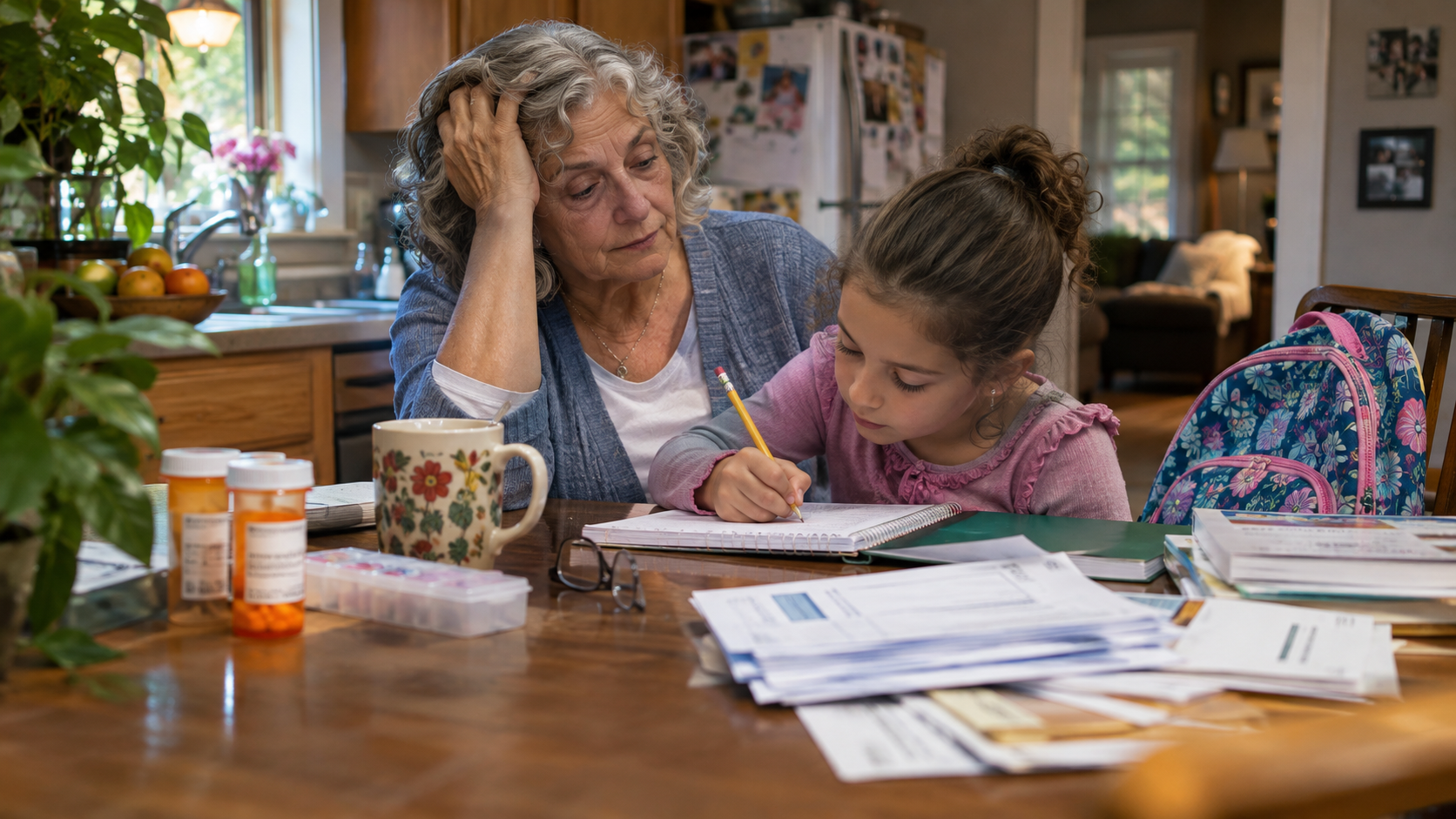
You would do it again. That part isn’t in question. But somewhere between the school run and the third broken night in a row, something started building that you don’t have a word for, and it isn’t gratitude. The mental health toll on grandparents raising grandchildren is real, and feeling worn down by it doesn’t mean you love them any less.
Why More Grandparents Are Raising Grandchildren
These households have a name now. Grandfamilies are homes where grandparents or other relatives raise children whose parents can’t. The reasons vary: substance use, incarceration, mental illness, financial collapse, or a parent no longer in the picture.
Census figures show that nearly half of grandparents living with their grandchildren had been responsible for them for five years or longer in 2021, up from about 39% in 2012. For many grandfamilies, this stopped being a short-term favor a long time ago. It became the arrangement.

Mental Health Toll of Grandparents Raising Grandchildren
Grandparent burnout may build when caregiving runs for years without enough relief, and it can show up even when the arrangement was freely chosen. The love isn’t in doubt, and the tank could still be empty.
What it tends to look like:
- Waking up tired no matter how long you slept
- Snapping at the kids over something small, then feeling terrible about it
- Losing interest in the things that used to be yours
- A low background dread you can’t trace to any one thing
It often sits alongside something heavier, especially when the grandchildren arrive through a crisis rather than a plan.
Losses That Sit Alongside the Love
There is grief in this that rarely gets named, because naming it feels like complaining about children you adore.
You lost the retirement you pictured. The travel, the slow mornings, the version of your sixties you’d planned around for twenty years. Your money is going somewhere you never budgeted for. Your body is doing things it stopped being built for a decade ago.
And your friends are unreachable. They’re on trips and at dinners while you’re at a parent-teacher conference, and there is nowhere to put that, because everyone assumes you’re fine. You are never by yourself, and you are still without company most days. The adult conversation goes first, then the invitations stop, and the loneliness that builds in older adults can settle in even in a full house.
None of that means you regret the decision. Two things hold at the same time: you would choose them again, and you lost something real. Grieving the second doesn’t cancel the first.
Support, Respite, and When to Get Evaluated

Support for grandparent caregivers exists, and many people find it late. Kinship navigator programs, local Area Agencies on Aging, and school social workers can connect you to respite care, financial assistance, and support groups of people in exactly your situation. That last one may matter more than it sounds.
Consider talking with a mental health professional if:
- Low mood or exhaustion has lasted for weeks, even with some rest
- You’ve lost interest in things you used to enjoy, including time with the kids
- Your sleep or appetite has changed and stayed changed
- You feel hopeless about the years ahead
- Everyday tasks have become harder to manage
Burnout and depression can overlap, and it may be hard to tell them apart on your own. Any of these signs is a good reason to ask for an evaluation, whatever label ends up fitting.
Final Thoughts
You are doing something difficult and largely invisible, and you’re doing it without the structure that new parents get. Feeling depleted often reflects the size of the job, not a verdict on you. If the strain isn’t easing on its own, mental health care built for older adults can help, and telehealth appointments may mean you don’t have to find childcare to get help.
Frequently Asked Questions (FAQs)
1. Is it normal to resent this sometimes?
Yes, and it’s more common than you might think. Resentment in a caregiving role often points to unmet needs or too little relief, rather than anything about the children. It tends to soften once respite and support are in place.
2. Where do I find respite or support for grandparent caregivers?
Start with your local Area Agency on Aging, which can point you toward kinship navigator programs, respite funding, and support groups. School counselors and your grandchild’s pediatrician often know local options.
3. When should I talk to a provider about caregiver strain?
Consider reaching out when low mood, loss of interest, hopelessness, or changes in sleep or appetite last for weeks, or when daily tasks get harder to manage. Strain can linger even after rest, and it can overlap with depression, so you don’t need to work out which one it is first.
Explore More



Animo Sano Psychiatry is now serving patients across multiple states. If you’d like to schedule an appointment, please contact us to get started.
Get Access to Behavioral Health Care
Let’s take your first step towards. Press the button to get started. We’ll be back to you as soon as possible.ecovery, together.