

Key Takeaways
- Older adults need the same seven to nine hours as everyone else. The requirement doesn’t shrink.
- What changes: sleep gets lighter, you wake more often, and your schedule shifts earlier.
- Before blaming age, rule out the fixable: medications, evening alcohol, late naps, night-time bathroom trips.
- Insomnia, sleep apnea, and restless legs are manageable, not signs of decline.
- Poor sleep can mimic memory trouble and raise depression risk, which is why treating it matters.
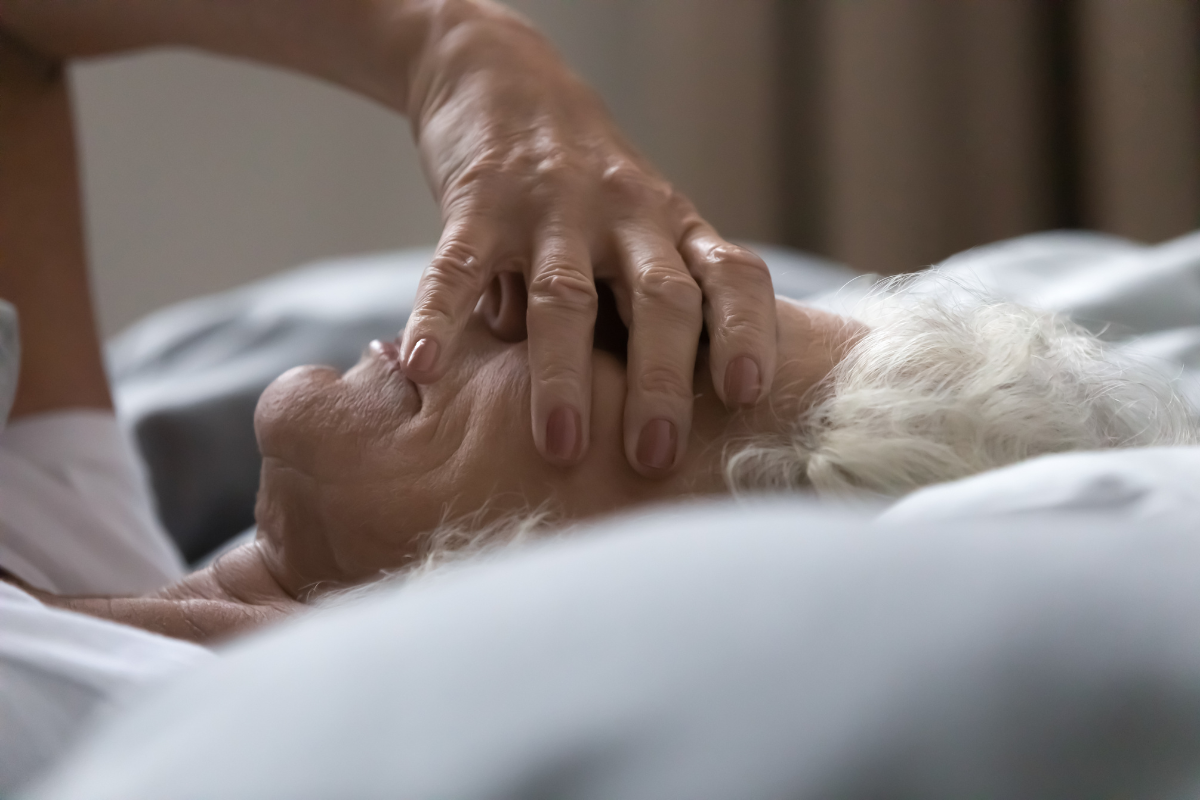
It’s 4 am and you’re wide awake again. You were up twice before that, and by mid-afternoon you’ll be fighting to keep your eyes open. Somewhere along the way you decided this is what happens now, that sleeping badly comes with age like reading glasses.
Some of it is aging. Some of it is a treatable condition wearing the same disguise.
Sleep Changes With Age: What’s Normal and What Isn’t
The belief that stops people mentioning this is that older adults need less sleep. It isn’t true. Older adults need about the same amount of sleep as all adults, seven to nine hours each night, though they do tend to go to sleep earlier and get up earlier than they used to.
What shifts is when your body wants to sleep and how well it holds on. Time in each stage decreases, sleep becomes shorter and lighter, you wake more often, and your internal clock drifts earlier. That’s why the 9 pm heavy eyelids and the 5 am ceiling-staring arrive together.
| Does change with age | Does not change with age |
| Sleep becomes lighter | You still need seven to nine hours |
| You wake more often in the night | Exhaustion every day isn’t normal |
| Bedtime and wake time shift earlier | Chronic insomnia isn’t inevitable |
| Less time in deep sleep | Loud snoring isn’t “just age” |
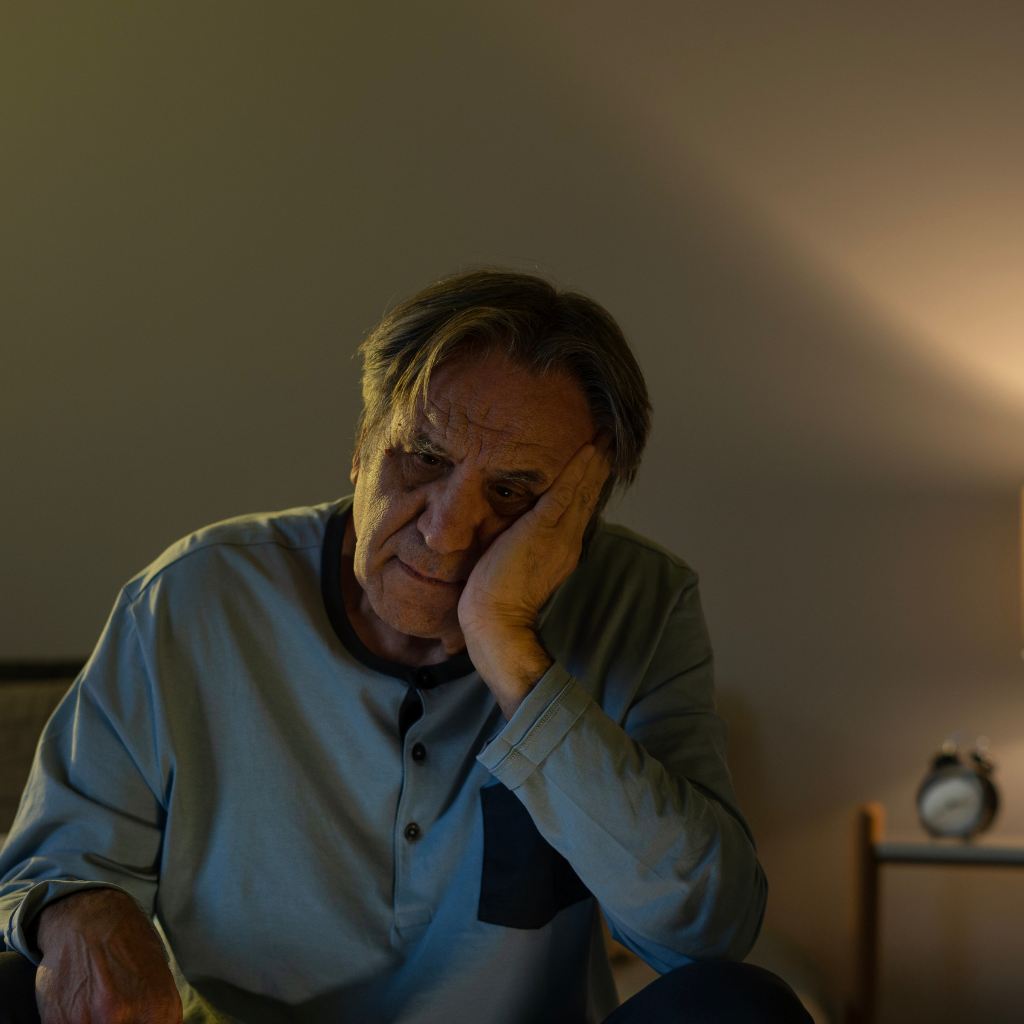
Anything on the right is worth raising with a provider. Waking once or twice and drifting back off isn’t a disorder. Waking at 2 am and lying there for an hour, night after night, is.
If you’re getting five hours and feeling wrecked, you’re running a nightly deficit, and that’s solvable. You’re in a lot of company: in one large community study of older men, more than six in ten reported sleep difficulties.
First, Rule Out the Simple Things
Before assuming your sleep is the problem, check what might be interfering with it. The answer is often ordinary and fixable.
Medications and medical conditions come first. Older adults are more likely to take medications and have conditions that affect sleep, including ones you’d never suspect. That gives you a specific question for a provider: could anything I’m taking be involved? It turns “my sleep is broken” into “something is breaking my sleep,” which has somewhere to go.
Three everyday habits are worth auditing:
- Getting up to urinate. Cutting evening fluids helps some people, but frequent night-time urination is also a sleep apnea sign, so if it comes with snoring, mention both.
- The evening drink. Alcohol brings on drowsiness then fragments the second half of the night, so it feels like a sleep aid while working against you. Guidance for older adults is to avoid it entirely.
- The late-afternoon nap. A long nap after mid-afternoon borrows from the sleep pressure you need that night. If you’re napping at 4 pm and awake at 1 am, those facts are connected.
Insomnia, Sleep Apnea, and Restless Legs
If the simple things don’t explain it, three conditions account for most of what’s left. All are treatable, and all get written off as aging.
Insomnia is the most common sleep problem in adults aged 60 and older. The definition is practical: trouble falling asleep or staying asleep at least three nights a week. Past three months, without another medical explanation, it’s chronic. Common isn’t inevitable.
Sleep apnea means repeatedly stopping and starting breathing during sleep, and the risk rises with age. The signs worth acting on are loud snoring, breathing pauses that a partner notices, waking up gasping or choking, and daytime sleepiness heavy enough to interfere with ordinary life. Not everyone who snores has it, and many who do have no idea. Often a spouse notices first, which makes their observation clinical information rather than nagging.
Restless legs syndrome is common in later life and frequently goes unnamed. It feels like tingling, crawling, or pins and needles in one or both legs, worse at night and better when you move. If the only relief is getting up and walking, this isn’t ordinary trouble falling asleep, and treatment usually helps. Related conditions can also disrupt sleep, including one in which people act out their dreams, which can become a safety issue.
When Sleep Problems Look Like Memory Loss or Depression
Poor sleep doesn’t only make you tired. The same clinical source on sleep apnea notes it can bring memory concerns, difficulty concentrating, and mood changes, including feeling depressed or easily upset. Those are the symptoms that raise fears about dementia. Poor sleep is separately linked to memory problems, negative feelings, and higher fall risk, and sits close to the distinction between depression and dementia that so often gets muddled.
When disrupted sleep is driving the memory and concentration trouble, treating it tends to improve them. That’s why a sleep evaluation belongs early in the workup when memory is the worry.
The depression link runs both ways. Depression disrupts sleep, and early-morning waking is a classic sign. Disrupted sleep also raises the odds of depression developing later: a systematic review and meta-analysis of longitudinal studies in later life found that older adults with disrupted sleep were roughly 1.8 times as likely to develop depression, and the authors concluded that older adults with sleep difficulties are legitimate targets for depression prevention.
Insomnia is also the symptom people are willing to name. Saying “I’m not sleeping” feels acceptable in a way “I feel hopeless” doesn’t. If sleep is bad and the days have gone flat, mention both. They’re often one problem, and both respond to treatment.
What Actually Helps

The first-line treatment for chronic insomnia isn’t a pill. It’s a structured, short-term therapy called CBT-I, cognitive behavioral therapy for insomnia, and it works at this age. An analysis pooling three randomized trials in adults aged 65 and older found insomnia remission in 60% of those who received digital CBT-I, compared with 16% of controls, with improvements in depression and anxiety symptoms as well.
CBT-I is time-limited, a handful of focused sessions on your sleep schedule and habits rather than open-ended therapy. It doesn’t require a specialist nearby, since those trials tested a digital program and telehealth has made guided CBT-I far easier to reach.
If you’ve been handed a sleep hygiene list and found it did little, you weren’t doing it wrong. A large analysis of 241 trials found the components doing the real work in CBT-I are sleep restriction, stimulus control, and cognitive restructuring, while sleep hygiene education on its own was not an essential ingredient. Sleep hygiene is the part everyone gets, and rarely the part that fixes it.
Final Thoughts
If you’ve spent years assuming broken nights are the cost of getting older, only half of that is true. The shape of your sleep changes with age. The amount you need doesn’t, and the conditions that steal it are among the more treatable problems in medicine.
A good first step costs a minute a day: keep a sleep diary for two weeks, noting when you go to bed, when you wake, when you get up, and whether you had caffeine or alcohol. It gives a provider something concrete. Care that evaluates and treats sleep disorders alongside the mood and memory concerns that travel with them is available in person and by telehealth.
Frequently Asked Questions (FAQs)
1. My doctor said poor sleep is normal at my age. What now?
Ask a narrower question. Try: “I’m sleeping five hours and it’s affecting my days. Is this insomnia or sleep apnea?” Naming the conditions signals you want an assessment, not reassurance. If you still leave without a plan, ask for a referral.
2. What does a sleep study involve?
Either a small device you wear overnight at home, or a night at a sleep center where sensors record your breathing, brain activity, eye movement, and muscle activity. You go home in the morning either way.
3. I have other health problems. Is sleep worth raising?
Yes. Sleep affects pain, mood, memory, blood pressure, and fall risk, and poor sleep worsens conditions you’re already managing. It’s also one of the more treatable items on your list.
Explore More
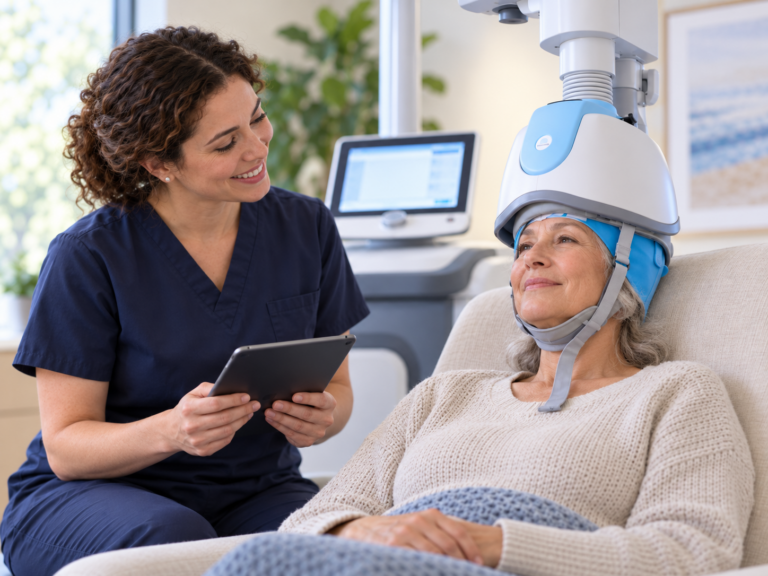

Animo Sano Psychiatry is now serving patients across multiple states. If you’d like to schedule an appointment, please contact us to get started.
Get Access to Behavioral Health Care
Let’s take your first step towards. Press the button to get started. We’ll be back to you as soon as possible.ecovery, together.