
DBT vs CBT: What’s the Difference and When Is DBT the Right Choice?

Stefanie Solomon, PA-C, CAQ-PSY
Key Takeaways
- DBT is a form of CBT, but the two therapies differ significantly in focus, structure, and what they feel like in practice.
- CBT centers on identifying and changing unhelpful thought patterns. DBT leads with acceptance and teaches skills for managing intense emotions.
- DBT was originally developed for borderline personality disorder but is now used for many conditions involving emotional dysregulation.
- The right therapy depends on what you are experiencing, not just your diagnosis. Some people benefit from elements of both.
- The quality of the therapeutic relationship matters as much as the specific method. A good fit between you and your therapist is essential.
If you are exploring therapy for the first time, the number of approaches available can feel overwhelming. And if you have already tried therapy and felt like something was missing, you may be wondering whether a different approach could be a better fit.
Two of the most widely used forms of psychotherapy are cognitive behavioral therapy (CBT) and dialectical behavior therapy (DBT). Understanding how they differ, not just in theory but in what they actually feel like, can help you make a more informed decision about your care.
What CBT and DBT Have in Common
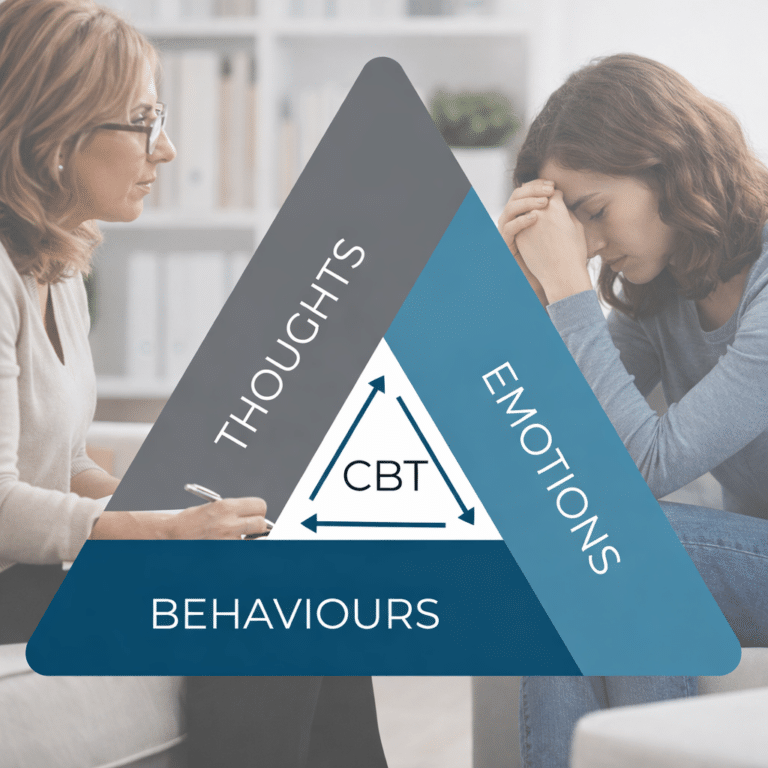
Before looking at the differences, it helps to understand what these therapies share. Both are evidence-based forms of talk therapy. Both recognize that thoughts, feelings, and behaviors are connected. Both involve working with a therapist to develop practical skills you can use outside of sessions.
DBT was developed as an extension of CBT, so the two share a foundation. Where they differ is in emphasis, structure, and the way they approach change.

How CBT and DBT Differ in Practice
The following table summarizes the key differences:
| CBT | DBT | |
| Primary focus | Changing unhelpful thought patterns and behaviors | Acceptance, emotional regulation, and distress tolerance |
| Approach to change | Challenges negative thoughts directly using logic and evidence | Balances acceptance of current emotions with gradual behavioral change |
| Session format | Mostly individual sessions with homework | Individual therapy plus group skills training |
| Typical duration | 12 to 20 sessions | 6 months to a year or longer |
| Best supported for | Anxiety, depression, OCD, PTSD, phobias | BPD, emotional dysregulation, self-harm, eating disorders, substance use |
What CBT Focuses On
CBT helps you identify patterns of thinking that contribute to emotional distress and teaches you to evaluate and restructure those thoughts. It is structured, goal-oriented, and typically short-term. It is also one of the most well-researched forms of psychotherapy, with strong evidence supporting its use for anxiety disorders, depression, and other mental health conditions.
CBT often involves homework between sessions. This might include keeping a thought record where you write down a distressing situation, the automatic thought that came with it, and a more balanced alternative. This process is built on the idea that thoughts, feelings, and behaviors are closely connected, and that shifting one can shift the others. Over time, you learn to catch and re-evaluate these patterns on your own. For many people, this structured approach provides a clear path forward, especially when specific thought patterns are driving their distress.
What DBT Focuses On
DBT teaches four core skill areas: mindfulness, distress tolerance, emotional regulation, and interpersonal effectiveness. In practice, this means learning how to stay present during emotional intensity, tolerate painful moments without making them worse, identify and shift emotional responses over time, and communicate your needs without damaging relationships.
Rather than starting by challenging your thoughts, DBT starts by validating your experience and then building these skills to help you manage intense emotions without resorting to harmful behaviors.
Marsha Linehan developed DBT in the 1980s specifically because she observed that some patients needed acceptance and validation before they could engage with the change-oriented strategies of traditional CBT. Randomized controlled trials have since established DBT as an effective treatment not only for borderline personality disorder but for substance use, depression, PTSD, and eating disorders. Today, DBT is one of several evidence-based psychotherapy approaches used to treat BPD.
DBT typically includes both individual therapy and a weekly group skills training component. The group sessions are structured more like a class than traditional group therapy. A facilitator teaches a skill, and participants practice it together. You are not asked to share your personal story or discuss your diagnosis with the group, which can be reassuring if the idea of group therapy feels uncomfortable.
Why Some People Connect With One More Than the Other
Both CBT and DBT are effective therapies. But they enter the work from different directions. CBT asks you to examine your thoughts and question whether they are accurate. DBT asks you to accept what you are feeling and then learn to manage it differently.
For some people, CBT’s structured, logic-based approach provides exactly the clarity they need. For others, particularly those whose distress feels more emotional than cognitive, being asked to challenge their thinking can feel premature or even dismissive when the emotions themselves feel overwhelming. This is not a flaw in CBT. It is a signal that a different entry point may be needed. DBT was designed specifically for this: to meet people where they are emotionally before asking them to change.
It is also worth noting that some people benefit from DBT’s skills in the short term for managing crisis-level emotions, and later find that CBT’s thought-restructuring tools become useful once they have more stability. The two approaches are not mutually exclusive, and for many people, the question is less about choosing one and more about which to start with.
When Is DBT the Right Choice?
DBT may be a good fit if you recognize yourself in any of the following:
- You experience intense emotions that feel difficult to control or that shift rapidly
- You find yourself in recurring relationship patterns that cause distress
- You have used self-harm, disordered eating, or substances as ways of coping with emotional pain
- You have tried CBT and found that working on thought patterns alone did not address the intensity of what you feel
- You need practical skills for getting through moments of emotional crisis
It is worth knowing that DBT is a larger commitment than standard CBT. A full program typically runs six months to a year and includes both weekly individual sessions and a group skills component. This can feel like a lot, but the structure is intentional. DBT builds skills in layers, and the combination of individual therapy and group practice is what makes those skills stick in real life.
How to Find the Right Fit

Choosing between CBT and DBT is not always straightforward, and the truth is that the specific method matters less than many people assume. Across decades of psychotherapy research, the quality of the therapeutic relationship has consistently emerged as a reliable predictor of positive outcomes, regardless of the model being used.
A few things that can help you find the right fit:
- Ask your therapist about their approach and what a typical session looks like
- Give feedback if something in the process does not feel right. You have the right to shape your own treatment
- If one approach has not worked, that does not mean therapy itself has failed. It may mean a different approach, or a different therapist, is a better match
The goal is not to find the “correct” therapy. It is to find the one that helps you move forward.
Final Thoughts
If you have read this far, you are already doing something meaningful. Taking the time to understand your options is not a small thing, especially when you are navigating something as personal as how you want to approach your own mental health care.
The difference between CBT and DBT matters, but it is not the only thing that matters. What matters just as much is finding a provider who listens, who explains what they are doing and why, and who is willing to adjust the approach if something is not working. Therapy is not a one-size-fits-all process, and the willingness to try, evaluate, and adjust is part of what makes it effective.
You do not need to have everything figured out before reaching out. A psychiatrist or therapist can help you determine which approach fits based on what you are experiencing, your goals, and your history. If you are considering psychotherapy and want help figuring out where to start, speaking with a mental health provider can make that process easier.
Frequently Asked Questions (FAQs)
1. Can you do both CBT and DBT?
Yes. Some people benefit from elements of both, either in sequence or combined by a therapist trained in both approaches. Your therapist can help determine what combination makes sense for your situation.
2. Is DBT only for borderline personality disorder?
No. DBT was originally developed for BPD, but it is now used effectively for many conditions involving difficulty managing intense emotions, including eating disorders, substance use, PTSD, and treatment-resistant depression.
3. What if neither CBT nor DBT feels right?
Other evidence-based therapies exist, including acceptance and commitment therapy (ACT), EMDR, and internal family systems (IFS). The most important step is staying open to finding what works for you.
Responsibly edited by AI


Animo Sano Psychiatry is now serving patients across multiple states. If you’d like to schedule an appointment, please contact us to get started.
Get Access to Behavioral Health Care
Let’s take your first step towards. Press the button to get started. We’ll be back to you as soon as possible.ecovery, together.