
CBT for Insomnia (CBT-I): What It Is, How It Works, and What to Expect

Maddison Henley, PA-C, CAQ-PSY

Sleep is foundational to mental and physical health and when it becomes consistently difficult, the impact extends far beyond feeling tired. Chronic insomnia can affect mood, concentration, relationships, and the ability to function day to day in ways that compound over time.
For many people, finding a treatment that addresses the root causes of sleep difficulties, rather than just the symptoms, makes a meaningful difference. Cognitive behavioral therapy for insomnia, or CBT-I, is one well-studied option recognized in clinical guidelines.
What Is Chronic Insomnia?
Insomnia is defined as persistent difficulty falling asleep, staying asleep, or waking earlier than desired, despite having adequate opportunity for sleep. When these difficulties occur at least three nights per week for three or more months and affect daytime functioning, it meets the criteria for chronic insomnia disorder.
Chronic insomnia is more common than many people realize, affecting an estimated 10–15% of adults. It frequently co-occurs with anxiety, depression, chronic pain, and other conditions and this can make both identification and treatment more complex.

What Is CBT-I?
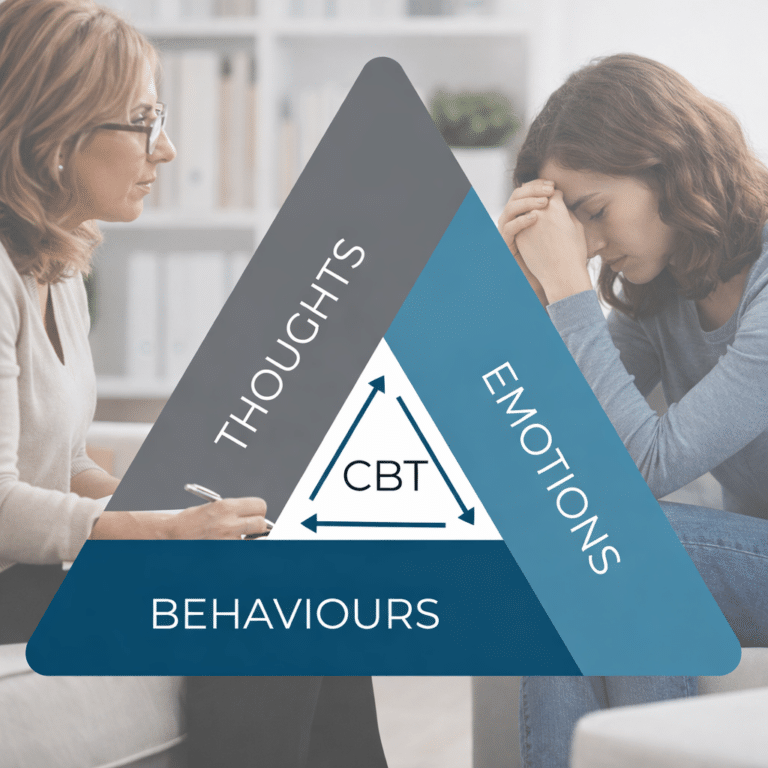
Cognitive behavioral therapy for insomnia is a structured, time-limited treatment that targets the thought patterns and behaviors that can maintain sleep difficulties over time.
A key principle underlying CBT-I is that chronic insomnia is often maintained not by its original cause, such as stress, illness, or a significant life event, but by the patterns that develop in response to it. These may include habits that interfere with sleep, heightened bedtime anxiety, or unhelpful beliefs about what poor sleep means.
CBT-I works by identifying and gradually modifying those patterns. It does not require medication and can be adapted to fit different presentations.
The Five Components of CBT-I
1. Sleep Restriction Therapy
Sleep restriction temporarily adjusts the time spent in bed to more closely match how much a person is actually sleeping. This builds the body’s natural drive to sleep, improves efficiency over time, and can feel challenging in early weeks, making provider guidance especially helpful.
2. Stimulus Control
Spending extended time awake in bed can lead the brain to associate the bed with wakefulness and worry rather than rest. Stimulus control rebuilds that connection. For example, using the bed only for sleep and leaving the bedroom when unable to sleep after a period of time.
3. Cognitive Restructuring
This component addresses thought patterns that increase anxiety around sleep, such as overestimating the consequences of a poor night or holding rigid beliefs about sleep requirements. The goal is to develop more balanced, flexible ways of thinking about sleep.
4. Relaxation Training
Many people with chronic insomnia experience physiological hyperarousal, a nervous system that stays active and alert at night. Techniques such as progressive muscle relaxation, slow breathing, and mindfulness-based approaches help reduce this arousal and support the transition into sleep.
5. Sleep Hygiene Education
Sleep hygiene covers the environmental and lifestyle factors that influence sleep quality — consistent wake times, limiting caffeine later in the day, and reducing stimulating activity before bed. Within a CBT-I program, it reinforces and supports the other components.
Who May Benefit From CBT-I?
CBT-I has shown benefit for many people with chronic insomnia, including those whose sleep difficulties co-occur with:
- Anxiety
- Depression
- PTSD and trauma
- ADHD
- Chronic pain or medical conditions
- Older adults, who experience insomnia at higher rates
CBT-I may not be the right starting point for everyone. A behavioral health provider can help evaluate whether it is appropriate and how it might fit within a broader treatment plan.
When to Seek Support for Insomnia

It may be time to reach out if sleep difficulties have persisted for more than a few weeks, are occurring most nights, and are affecting how you feel or function during the day. Chronic insomnia tends not to resolve on its own once established — but it does respond to care.
Final Thoughts
Chronic insomnia can be disruptive and exhausting but it is also highly treatable. CBT-I offers a structured, evidence-based path for addressing the patterns that keep sleep difficulties going, and it can be tailored to fit each person’s needs and circumstances.
Frequently Asked Questions (FAQs)
1. How is CBT-I different from regular therapy?
CBT-I is a structured, skills-based protocol specifically designed for insomnia, not a general exploration of mental health concerns. It follows a defined sequence of components over a set number of sessions.
2. How many sessions does CBT-I take?
Most programs involve 6–8 sessions, though this can vary based on the individual’s presentation and response to treatment.
3. Can CBT-I be used alongside medication?
Yes. CBT-I and medication can be used together, particularly when insomnia is more severe. A provider can help determine the right combination.
4. Is CBT-I available via telehealth?
Yes. Telehealth-delivered CBT-I is widely available and has shown comparable outcomes to in-person treatment. Contact us to learn more about remote options at Animo Sano.
Responsibly edited by AI


Animo Sano Psychiatry is now serving patients across multiple states. If you’d like to schedule an appointment, please contact us to get started.
Get Access to Behavioral Health Care
Let’s take your first step towards. Press the button to get started. We’ll be back to you as soon as possible.ecovery, together.