

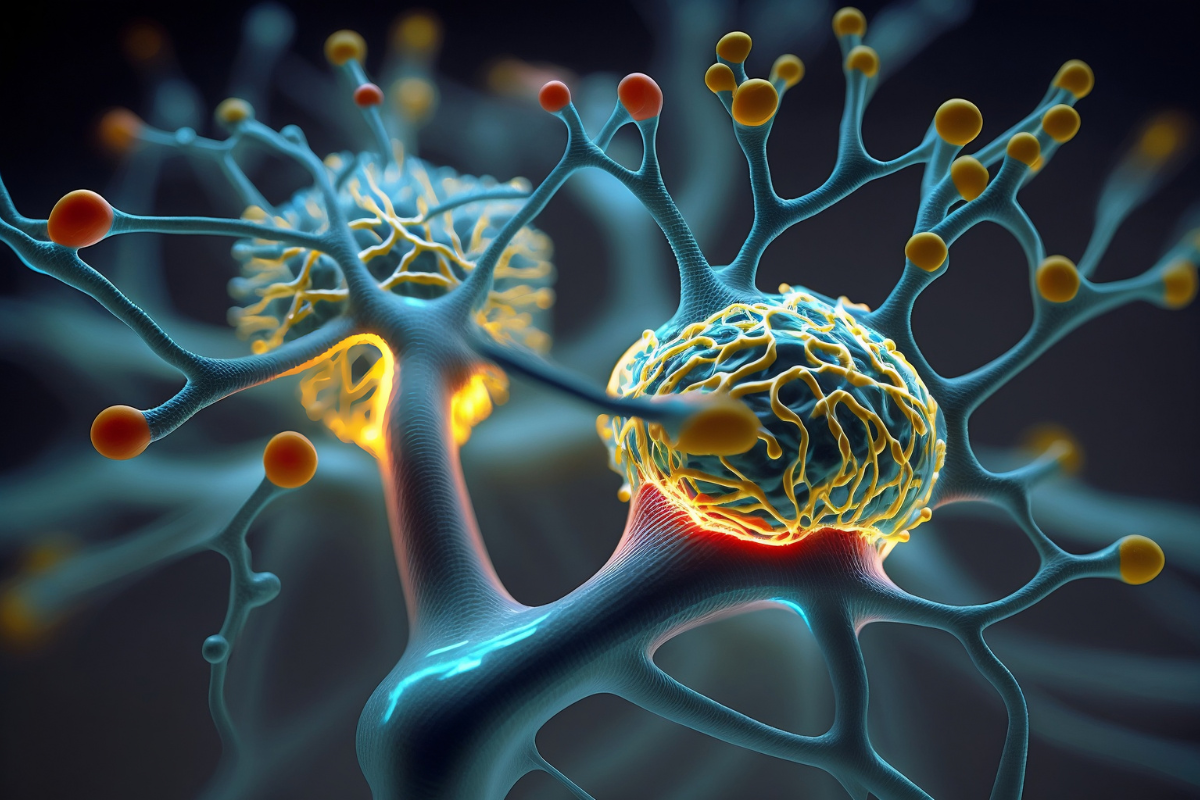
Many people are surprised to learn that the adult brain is still capable of change. For a long time, it was believed that once the brain matured, it became mostly fixed. Today, neuroscience tells a different story. The brain continues to adapt throughout life through a process called neuroplasticity. This ability to change plays an important role in learning, recovery, and mental health.
Understanding TMS and neuroplasticity together helps explain why transcranial magnetic stimulation can be helpful for some people living with depression. Rather than forcing change, TMS works alongside the brain’s natural ability to adapt over time.
What Is Neuroplasticity and How Does It Work
Neuroplasticity refers to the brain’s ability to adjust how its cells communicate with one another. At its core, this includes synaptic plasticity, which describes how connections between brain cells strengthen or weaken based on experience and repetition. These changes happen gradually and are influenced by learning, behavior, and environment.
Synaptic plasticity is how the brain forms habits, learns new skills, and adapts after stress or illness. When certain connections are used repeatedly, they become stronger. When they are no longer useful, they may weaken. This process allows the brain to remain flexible rather than fixed.
Neuroplasticity does not disappear in adulthood. While change may happen more slowly than in childhood, the adult brain can still form new patterns. This is one reason recovery from mental health conditions remains possible even after symptoms have been present for years.
In everyday life, neuroplasticity can look like:
- Learning new ways to respond to stress
- Letting go of unhelpful thought patterns
- Building habits that support emotional balance
These changes do not happen overnight, but they are achievable with the right support.
How Depression Can Affect Brain Flexibility
Depression is more than feeling sad or having a bad day. It is a common mental health condition that affects how the brain processes emotions, motivation, and decision making. In fact, according to the World Health Organization, depression affects an estimated 5.7% of adults worldwide, representing hundreds of millions of people globally. This widespread impact highlights that depression is not a personal weakness, but a serious and well-recognized health condition.
On a brain level, depression can reduce flexibility in emotional and mood-related circuits. When this happens, synaptic plasticity may become less responsive, making it harder for the brain to shift away from negative patterns. This can show up as persistent low mood, loss of interest, or difficulty experiencing pleasure.
These experiences are not personal failures or due to a lack of effort. They reflect how the brain is functioning during depression. Viewing depression through the lens of TMS and neuroplasticity can be reassuring, as it emphasizes that these brain patterns are capable of change.
How TMS Supports Neuroplasticity
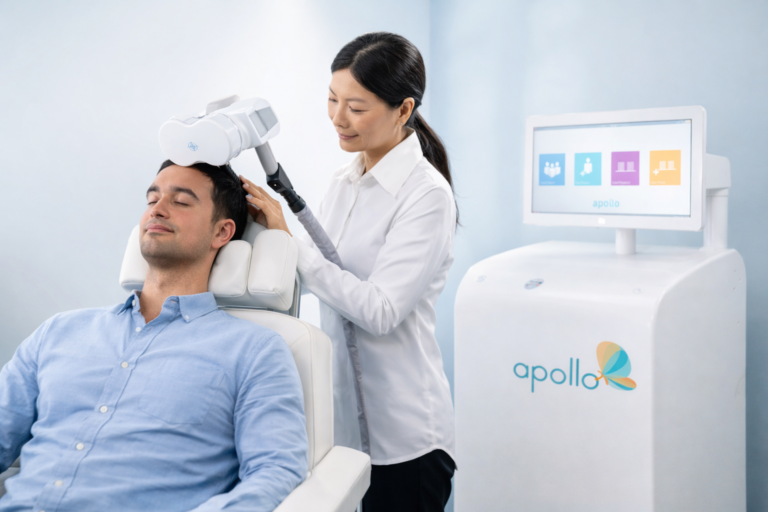
TMS is a non-invasive treatment that uses magnetic pulses to stimulate specific areas of the brain involved in mood regulation. These pulses gently activate targeted brain regions that may be underactive in depression.
Research suggests that when TMS is delivered repeatedly over several weeks, it can support neuroplastic and synaptic plasticity processes by encouraging healthier patterns of communication between brain regions. A review of neuromodulation research describes how repeated stimulation can strengthen these connections over time, rather than producing instant results, TMS works with the brain’s natural ability to adapt over time.
Why Repetition Matters
Neuroplasticity and synaptic plasticity depend on repetition. Lasting change develops gradually as the brain reinforces new patterns of activity. In this sense, TMS helps the brain practice healthier responses, making those patterns more likely to strengthen and persist.
This is similar to lifting weights or physical therapy. Repetitive movements cause the body to respond and strengthen over time. In the same way, consistency is an important part of treatment, because each TMS session builds on the last and supports changes that are more stable and long-lasting.
What Neuroplasticity Can and Cannot Do
Neuroplasticity offers hope, but it is important to be realistic. Supporting brain adaptability does not guarantee immediate or complete symptom relief. Everyone’s brain responds differently based on biology, history, and overall care.
What TMS and neuroplasticity can support includes:
- Gradual improvement in how the brain responds to emotional stress
- Greater flexibility in mood regulation over time
- Increased responsiveness to therapy, medication and coping strategies
What they cannot do is replace comprehensive mental health care. TMS works best as part of a broader treatment plan that may include psychotherapy, medication, and lifestyle support.
How TMS Fits Into Long-Term Mental Health Care
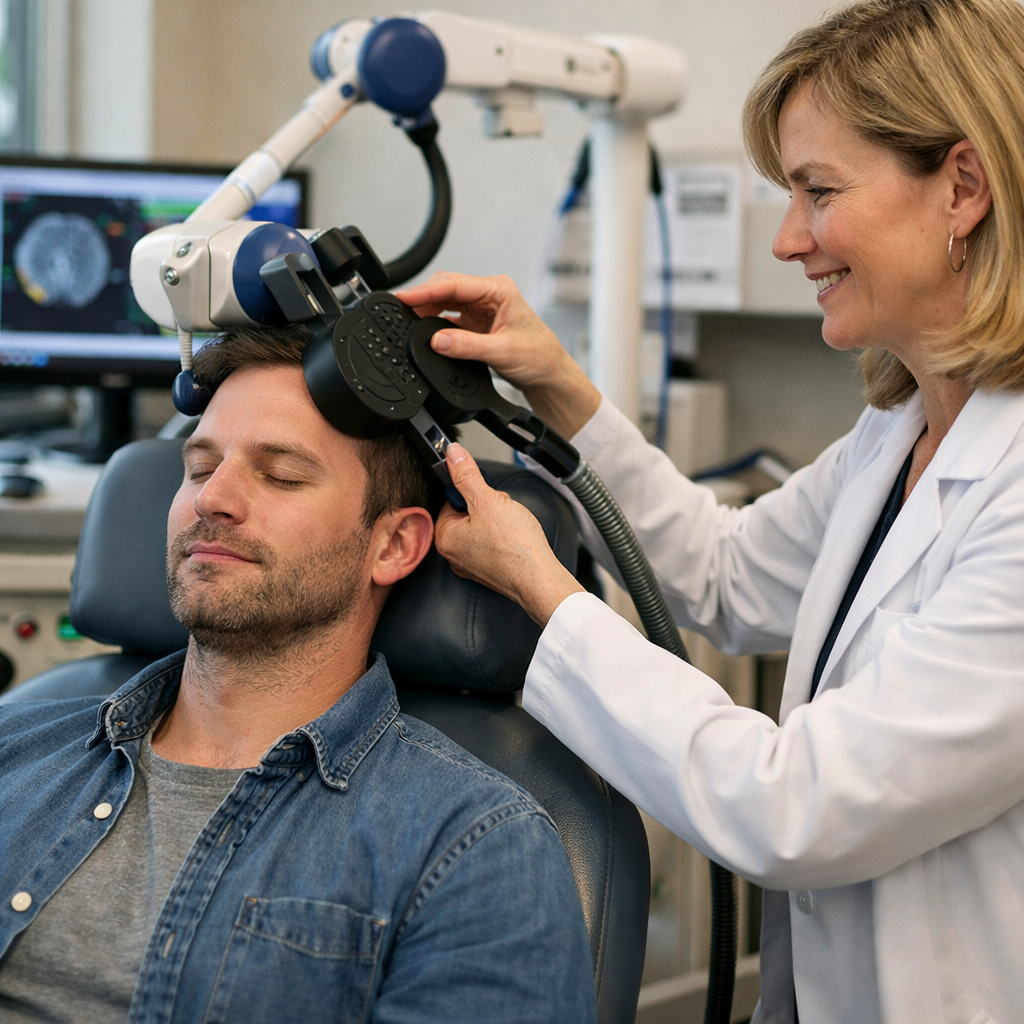
TMS is one of several tools used in modern psychiatry. It may be considered when other treatments have not provided enough relief or were difficult to tolerate. For some people, TMS helps create a window of opportunity where other forms of care become more effective.
Decisions about TMS should always be made in collaboration with a licensed mental health professional who can help determine whether it fits an individual’s needs and goals.
Final Thoughts
Neuroplasticity reminds us that the brain is capable of change, even after long periods of struggle. When viewed together, TMS therapy and neuroplasticity offer a framework for understanding how targeted treatment can support healthier brain activity over time.
While TMS is not a cure and not the right option for everyone, it shows an important shift in how mental health treatment is understood. The brain can learn, adapt, and heal again, especially when supported with thoughtful, individualized care.
Frequently Asked Questions (FAQs)
1. Is neuroplasticity the same as synaptic plasticity?
Neuroplasticity describes the brain’s overall ability to change, while synaptic plasticity refers specifically to how connections between brain cells strengthen or weaken over time.
2. Does TMS permanently change the brain?
TMS does not guarantee permanent change, but it can support lasting improvements by encouraging healthier patterns of brain activity through neuroplastic processes.
3. How is TMS different from medication?
Medication affects brain chemistry throughout the body, while TMS targets specific brain areas involved in mood regulation. Both approaches may support neuroplastic change in different ways.
4. Why do some people respond better to TMS than others?
Neuroplasticity varies between individuals based on factors like brain history, stress, and overall health, which can influence how someone responds to TMS.
5. Is TMS meant to replace therapy?
No. TMS works best as part of a comprehensive treatment plan that may include therapy, medication, and other forms of support.
Responsibly edited by AI


Animo Sano Psychiatry is now serving patients across multiple states. If you’d like to schedule an appointment, please contact us to get started.
Get Access to Behavioral Health Care
Let’s take your first step towards. Press the button to get started. We’ll be back to you as soon as possible.ecovery, together.