
Transcranial Magnetic Stimulation (TMS) For High Functioning Depression

Caleb Whitenack, MD

High-functioning depression can be incredibly isolating. From the outside, everything looks intact — work deadlines are met, conversations sound normal, and daily responsibilities get handled. But internally, many people describe a steady heaviness they can’t shake: emotional blunting, constant self-criticism, exhaustion masked as “productivity,” and a quiet sense of moving through life on robotic autopilot.
Because this form of depression doesn’t always disrupt functioning, it can go unnoticed for years — even by the person experiencing it. Therapy may help, medication may ease parts of it, but for some, the underlying dullness, fog, or emotional fatigue lingers.
That’s often when people begin exploring Transcranial Magnetic Stimulation (TMS) — not as a last resort, but as a treatment that directly targets the brain’s mood circuits when other approaches haven’t created full relief.
When Depression Hides Behind Functioning
High-functioning depression is easy to overlook because the symptoms don’t always show up in dramatic ways. Instead, they slip into a person’s inner experience:
- Feeling “low” even during positive moments
- Needing more effort to get through the day
- Persistent self-doubt
- Losing emotional spark, creativity, or drive
- Going through motions but not feeling connected to life
Many people describe it as “I’m not falling apart, but I’m not really okay either.”
Even though they’re still functioning, they often don’t receive the same level of support or recognition as someone with more visible symptoms. This can make healing feel even harder.
That’s where TMS becomes meaningful — it offers a biological approach that can reach the parts of depression talk therapy or medication alone may not fully touch.

How TMS Supports the Brain in Subtle Forms of Depression?
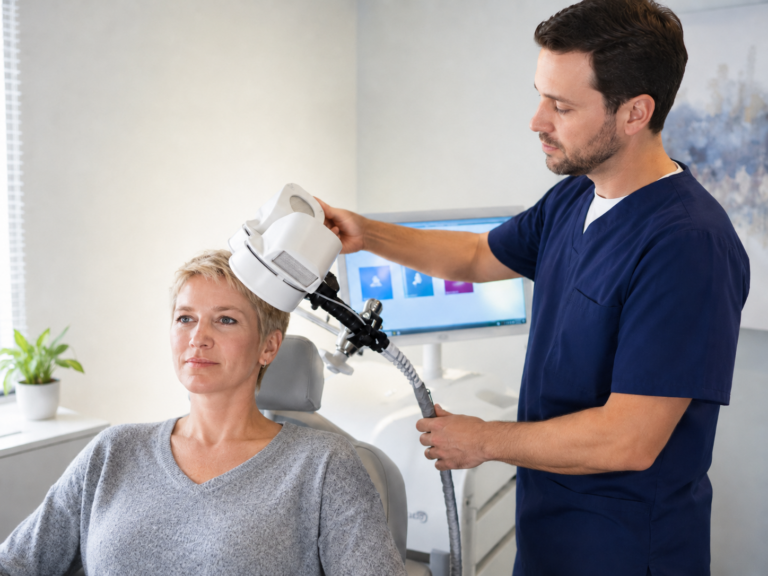
TMS works by stimulating the prefrontal cortex — a region deeply involved in mood regulation, motivation, and emotional balance. In high-functioning depression, this area may be underactive, contributing to symptoms like low mood, reduced pleasure, and decreased cognitive flexibility.
Research consistently shows that when this region is stimulated, mood circuits begin functioning more effectively.
For example, a naturalistic study of 307 patients found significant symptom improvement after TMS, even in those who did not respond well to medications. Another 2024 meta-analysis demonstrated notable reductions in depression scores across multiple TMS protocols.
These findings matter for people with high-functioning depression because their symptoms often stem from low-grade but persistent dysregulation in mood networks — the kind TMS is designed to target.
Why High-Functioning Depression Responds Uniquely to TMS?
People with high-functioning depression often notice certain patterns:
- They “push through” responsibilities even when drained
- Stress responses stay activated longer than expected
- Joy feels muted, even during good experiences
- Mental clarity feels inconsistent
- Emotional resilience doesn’t match the effort they’re putting in
These are not personality traits. They are neurobiological experiences.
TMS can help by:
1. Enhancing Emotional Presence
Many people report feeling more connected to their emotions, less numb, and more able to experience small moments of joy after TMS. It’s not about becoming overwhelmingly emotional — it’s about regaining access to feelings that were previously blunted.
2. Improving Cognitive Clarity
Because TMS stimulates regions tied to focus and motivation, individuals often find they can think more clearly, make decisions more easily, and break free from chronic brain fog.
3. Supporting Internal Energy And Drive
The subtle “heaviness” or flatness that accompanies high-functioning depression can soften. People describe having a more natural, sustainable energy — not the forced momentum they relied on before.
4. Reducing Emotional Reactivity
TMS may help soften rumination, overthinking, and persistent self-criticism — common patterns in high-functioning depression that therapy alone sometimes struggles to shift.
What Makes TMS a Meaningful Option?

TMS is non-invasive, doesn’t require sedation, and has fewer systemic side-effects than many antidepressants. Because it doesn’t rely on daily medication dosing, it can offer relief to individuals who:
- Experience only partial results from medication
- Want to reduce reliance on antidepressants
- Struggle with medication side effects
- Feel emotionally flat or disconnected even with therapy
- Hide their symptoms so well that internal suffering goes unnoticed
This makes TMS especially helpful for people who want a treatment that aligns with their functioning — something that works quietly but effectively, without disrupting their daily routine.
Final Thoughts
High-functioning depression can feel like living two lives — one that everyone sees, and one that quietly weighs you down. Even when you’re keeping everything together, the internal effort can be exhausting.
TMS offers a different kind of support. It works with the brain directly, helping restore clarity, emotional balance, and a sense of presence that may have been missing for a long time. And for many people, this shift becomes the turning point that makes therapy more effective, daily life more manageable, and hope easier to hold.
If you’ve been functioning well on the outside but struggling silently on the inside, reaching out for an evaluation can be a meaningful first step. You deserve support that matches the depth of what you’re carrying — and you don’t have to navigate it alone.
Responsibly edited by AI


Animo Sano Psychiatry is now serving patients across multiple states. If you’d like to schedule an appointment, please contact us to get started.
Get Access to Behavioral Health Care
Let’s take your first step towards. Press the button to get started. We’ll be back to you as soon as possible.ecovery, together.